A conversation about EMS usually starts with technology and ends with a single question: “fine, but do the numbers add up for me?”. This text is about that second part. No promises nobody can keep — but with a method you can work out for yourself on a sheet of paper.
Updated: 14 September 2026
The market is growing — and that still proves nothing
Let us start with the figure you will see in every sales presentation: the global electrotherapy market is worth USD 1.38 bn in 2024, with a forecast of USD 1.98 bn in 2033 (Global Electrotherapy Market 2024–2033).
And what does that mean for your studio? On its own — nothing. A growing market does not put money into your account. It only tells you that the category is becoming established:
- equipment is becoming easier and easier to get hold of,
- clients increasingly know what to ask about,
- and in a few years' time EMS on a studio's list will stop being a differentiator and become the standard.
The practical conclusion is this: getting into EMS today is a different proposition from getting into it in five years' time. Today you build the position of the studio where people train in a suit. Later you will be catching up with the neighbour on the same street.
Where the demand comes from (and why this is not a fad)
The other side of the equation is the client. Here the numbers are less pleasant: obesity affects around 18% of adults in Poland, while among 15-year-olds the proportion of overweight individuals rose from 16% to 20% between 2018 and 2022 (Statistics Poland, 2023 health report).
This is not a statistical curiosity. It describes a group that grows every year and that sooner or later starts looking for something they can keep in the diary.
And here comes the sentence you hear at reception every day: „I have no time”. Let us translate that honestly — it is not a lack of motivation. It is arithmetic:
- an hour of training,
- plus the journey both ways,
- plus a shower and getting changed,
- total: two hours taken out of the day, three times a week.
A client does not give up because they do not want to. They give up because it does not fit. A studio able to offer a shorter format is not selling a “technological novelty” — removes a specific obstacle that the client names themselves. The conversation about price then becomes much easier.
It is also worth noting, who comes for EMS. These are often people who will not set foot in a classic gym — because they feel self-conscious, because they do not know what to do with a dumbbell, because they have had a bad experience with group classes. Training in a suit, one to one, in a closed room, is for them far less off-putting. That is a genuine widening of your customer base, not moving the same people between services.
Studio arithmetic, the heart of the matter
Here is the whole business case, in one sentence: your real limit is not the number of clients on your books but the number of windows in your diary.
A room has a fixed number of hours per week. A shorter session means more windows in the same room — at a price per session higher than standard personal training.
I will not give you a ready-made result, because every studio has different rent, a different schedule and different trainers. I will give you a method. Take a sheet of paper and run the numbers for your own business:
- How many hours a week do you actually sell from a single room. Not how many hours it is open — how many are sold.
- How much of that hour is left after deducting the trainer's pay, the rent attributed to the floor space and fixed costs.
- The same goes for an EMS session. As a working assumption, take it that a session including preparation and connecting the client takes half the window of a classic personal training session, while the price is a third higher. An assumption to verify in your own business, not a market figure — put in your own times and your own price.
If, once you put in real numbers, it turns out you are generating more revenue from the same square metre — you have your argument. If it does not add up, do not buy equipment, just improve the occupancy of what you already have. Equipment does not fix an empty schedule. I will say it again, because it is the most expensive mistake in this industry: equipment does not fix an empty schedule.
Retention — the quiet hero of this calculation
There is one more parameter that decides everything in fitness studios and rarely makes it into the calculation when buying equipment. Retention.
The chain is simple:
- a client who fits training into a shorter window, cancels less often,
- a client who cancels less often, stays longer,
- and a client who stays a few months longer is worth more than two new ones, whom you first have to acquire through advertising.
If you measure average client lifetime, it is that number — not sales alone — that will tell you after a few months whether the implementation worked.
One device, four ways to earn from it
One last thing that is often missed when calculating the return: the same device supports four different services, and each of them behaves differently in the schedule.
- One-to-one EMS — a classic session with a trainer. The highest price per hour, the most demanding in staffing terms.
- Two stations in parallel — one trainer runs two people at once. The unit price is lower, but revenue per hour of a trainer's work clearly higher.
- Mini groups — a format for those who want to train with friends and for whom the 1:1 price is a barrier. A good way in for new clients.
- Beauty treatments — a different audience, often a different time of day. It fills gaps in the schedule that training will not fill.
That last point is underrated. Mornings and early afternoons stand empty in most studios — and those are exactly the hours when a client comes in for a treatment rather than a workout.
What EMS will not fix
To be fair, because this is part of the sum too:
- It will not replace sales. If nobody knows about your studio, new equipment will not change that.
- It will not replace a trainer. A session run without a plan is simply a shorter session without a plan.
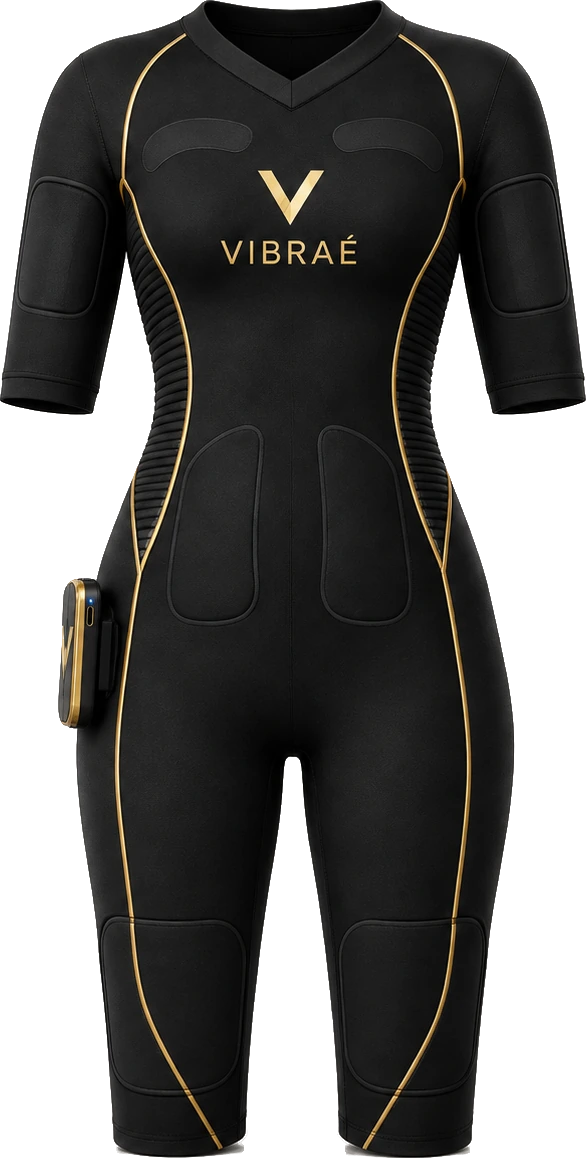
- It does not work by itself. Without training your team it stands in the corner as expensive decoration — the most common failed-purchase scenario we see.
If any of these three points describes your situation, start with it, not from the purchase.
What to ask before you choose a supplier
A few questions that separate a good decision from an expensive one:
- What happens if the equipment breaks down? How long a repair takes and whether you get a replacement device — because in the meantime your schedule is standing still.
- Who trains the team and what does the training cover? A demonstration of how to operate it is not implementation.
- What does the software look like from the trainer's side? Whether you can see a client's history and progress, and whether two stations can be run without chaos.
- Where the servicing is Equipment sent abroad takes weeks to come back.
Software is worth asking about loudest, and it is asked about least often. A panel you cannot work with can kill a good device.
Before you decide
Do not buy equipment from a description on a website — ours or anyone else's. Work out your own numbers using the method above, then see the system in action and ask about anything that does not sit right with you.
If you want to go through this together: book a call and a presentation. We will show you what a session looks like from the trainer's side and from the client's side, go through your schedule and check together whether the numbers add up in your studio. We agree commercial terms individually — they depend on exactly what you want to launch.
And if the numbers show it is not the right moment yet — we will tell you that too.