In rehabilitation after injury, the talk is increasingly not about „replacing” movement with current, but about combining classic exercise with neuromuscular electrostimulation (NMES/EMS). On the one hand we have the well-documented effectiveness of appropriately selected training, on the other – a growing body of research in which electrical stimulation speeds up the rebuilding of strength, limits muscle atrophy or improves joint function after an injury or procedure.
Updated: 14 September 2026
This text does not set EMS against exercise. The starting point is the assumption thatthe greatest value comes from the combination: well-planned movement rehabilitation + intelligently used current. The question is: in which specific situations does this combination have the strongest scientific and clinical rationale?
Contents
What happens to the musculoskeletal system after an injury?
An injury, an operation or a longer period of immobilisation rarely involves just one structure. Even „local” damage to a ligament or meniscus sets off a whole cascade of changes:
- muscle wasting (atrophy) – just a few days of immobilisation lead to a measurable drop in muscle mass and strength; studies with deliberate immobilisation of a limb have shown a loss of as much as around 1.5–2% of muscle strength a day if no form of stimulation is introduced.
- disturbed recruitment of muscle fibres – pain, swelling and fear of movement „switch off” some of the motor units. A typical example is weakness of the quadriceps after knee procedures.
- altered blood and lymph circulation – swelling, venous stasis, poorer lymphatic drainage, stiff tissues.
- the breakdown of movement patterns – the body „learns” to compensate: unloading the limb, changing its gait, positioning the pelvis or trunk differently.
It is in exactly this context that electrostimulation is worth seeing:as a tool that makes it possible to target precisely those elements that ordinary exercise objectively finds harder– particularly in the early stages of the return to fitness.
After knee procedures (ACL, meniscus, joint replacement), rebuilding strength while the joint is still braking
The knee is one of the best-researched areas when it comes to NMES. After anterior cruciate ligament (ACL) reconstruction, arthroscopy or total knee arthroplasty (TKA) you almost always see:
- a deep drop in quadriceps strength,
- its „inhibition” by pain and swelling,
- difficulty in achieving a strong, free contraction within a safe range of movement.
Several meta-analyses of patients after ACL surgery have shown that adding NMES to standard rehabilitation improves quadriceps strength more than exercise alone, especially if stimulation is introduced early after surgery.
A similar picture emerges after total knee replacement. Reviews of the research indicate that NMES used alongside physiotherapy can improve short- and medium-term quadriceps strength, reduce pain and support function (gait, standing up, functional tests), although not all results exceed the threshold of a minimal clinically important difference.
In practice this means that:
- at the stage where the range of movement has already been partly restored but the muscle is clearly weakened and „switched off”,
- combining simple closed-chain exercises (squats, standing up, loading the limb) with EMS on the quadriceps makes it possible to deliver a stronger muscular stimulus with less risk of provoking pain in the joint,
- the patient more quickly „regains contact” with a muscle that previously did not respond adequately to an attempt at active contraction.
This matters particularly in the context of returning to sport: a number of papers show that incomplete recovery of quadriceps strength after ACL surgery is one of the factors increasing the risk of further injuries.
During and after immobilisation – limiting muscle atrophy
The second well-documented area isthe period of immobilisationlimbs after fractures, surgery or more serious soft-tissue injuries. When a joint „does not work” for weeks, classic training in the full sense is simply impossible.
Studies involving deliberate limb immobilisation in healthy volunteers have shown that:
- a few days of complete immobilisation lead to a significant loss of muscle mass and strength,
- application daily NMES on immobilised muscles significantly limits muscle atrophy, and in some models also a drop in the ability to generate force.
Earlier clinical work had already suggested that even short sessions of low-voltage stimulation can noticeably reduce quadriceps atrophy while the knee is immobilised.
From the patient's point of view this means that:
- in the period when the joint may not yet be more fully loaded,
- EMS can act as a “bridge” – limiting the loss of muscle mass and quality before returning to active training,
- the intensity of movement in the joint is still limited, but the muscles themselves are regularly driven to work.
Once the cast or brace comes off, there is still a process of rebuilding strength, control and range of motion, but the starting point is objectively better than in a “full immobilisation without stimulation” scenario.
Recurrent sprains and ankle instability – support for stability and control
In patients with recurrent ankle sprains or chronic ankle instability, the following are often observed:
- weakness of the peroneal and calf muscles,
- an extended muscle reaction time (known as electromechanical delay),
- impaired deep sensation and control of foot positioning in space.
The most recent research has shown that a several-week NMES programme targeting the peroneus longus improves balance control in single-leg standing in people with chronic ankle instability, particularly in the frontal plane, which governs the foot “rolling” sideways.
Other work suggests that in acute sprains, using stimulation that produces contractions of the calf and lower leg muscles may reduce swelling by making venous and lymphatic outflow easier – acting as an active „muscle pump” alongside standard procedures such as RICE.
If at this point we add a well-planned programme of stabilisation exercises (balance, sensorimotor, progressing to dynamic tasks), EMS becomes a logical complement:
- helps to strengthen the muscles responsible for stabilising the ankle joint,
- intensifies the stimulus during balance exercises,
- at the same time it supports circulation in an area where swelling and stasis have been present for a long time.
Chronic spinal complaints and weakness of selected muscle groups
In chronic lower back or hip pain, you very often come acrossweakness of the trunk and gluteal musclesand disturbed movement patterns – regardless of whether the pain results from a single injury or years of overloading.
Several clinical studies have compared trunk exercise programmes with and without electrostimulation:
- in a randomised study in people with chronic lower back pain, combining trunk muscle training with NMES led to greater improvement in strength, function and quality of life than exercise alone, with the improvement persisting through the follow-up period.
- in another study in older adults with chronic lower back pain, NMES added to trunk muscle training was associated with greater improvement in function on walking and standing-up tests than a passive intervention.
- more recent work shows that in exercise programmes for people with non-specific lower back pain adding analgesic currents or electrostimulation can further reduce pain and improve functioncompared with training alone or training combined with other techniques, such as kinesiotaping.
From a clinical point of view the sense of it is very simple:
- in a situation where the patient has overloaded the lower back and hips for years while neglecting the strength of the glutes and trunk muscles,
- combining precisely chosen exercises with EMS on selected groups (e.g. the glutes, the abdominal wall, the back extensors) helps to rebuild their working capacity faster and bring them back into correct movement patterns: squat, lunge, run, lift.
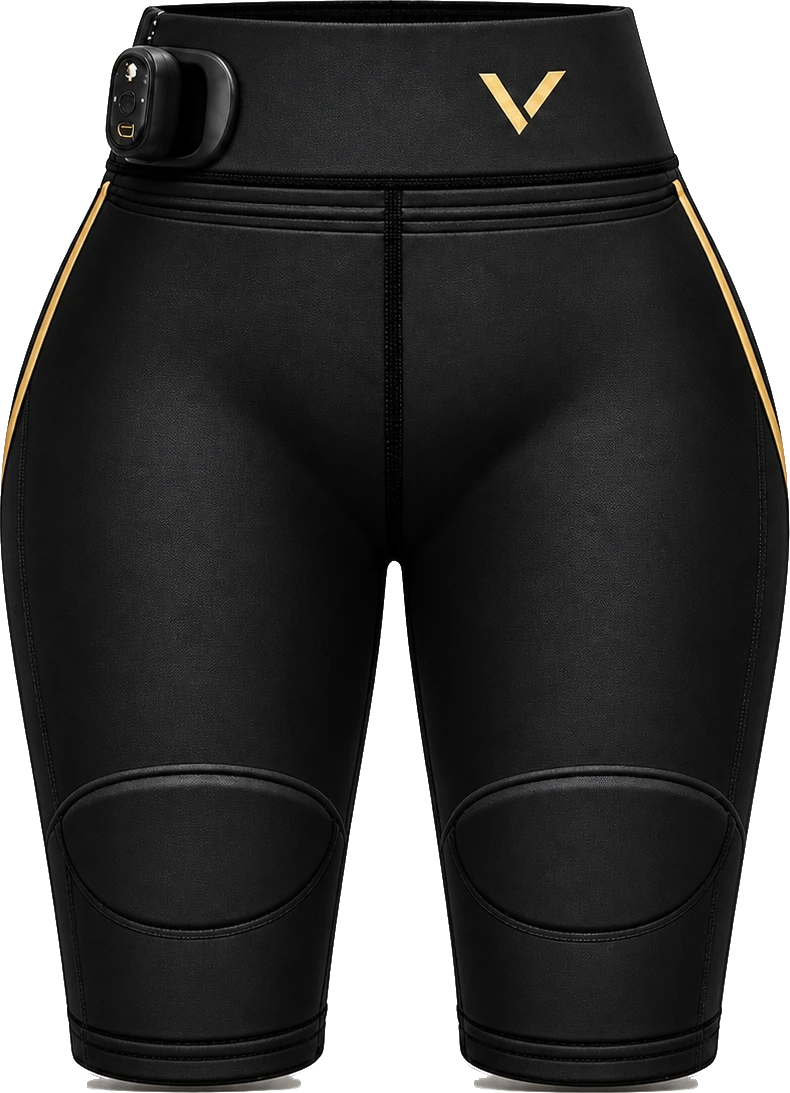
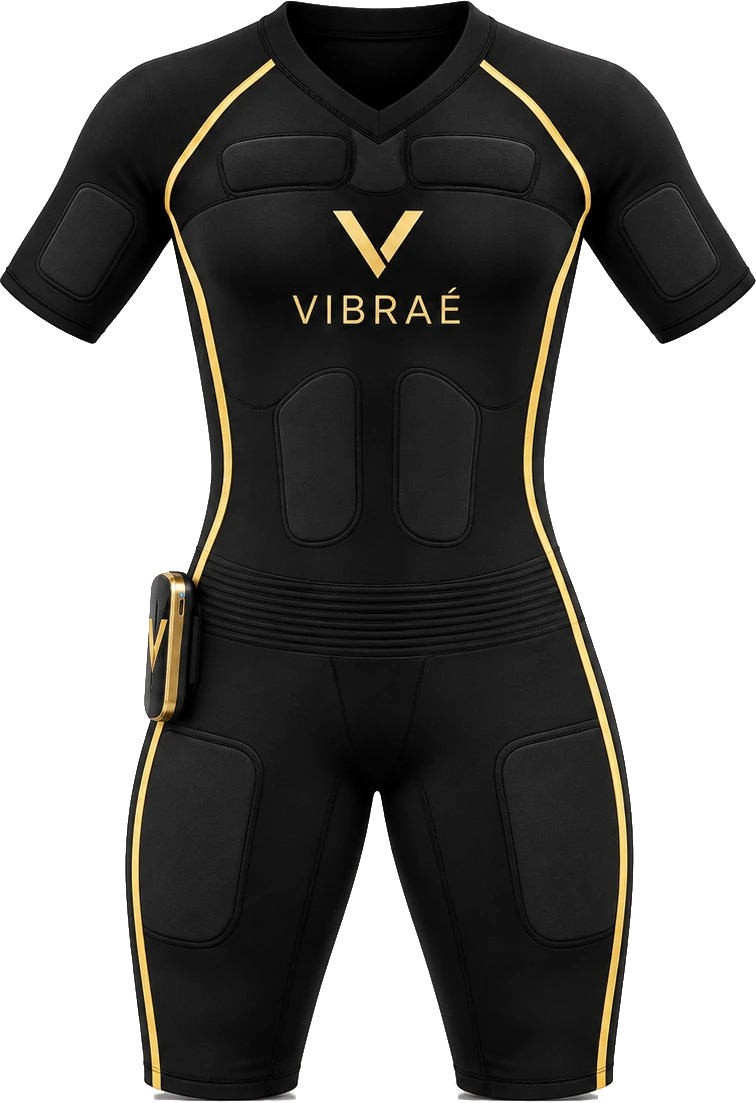
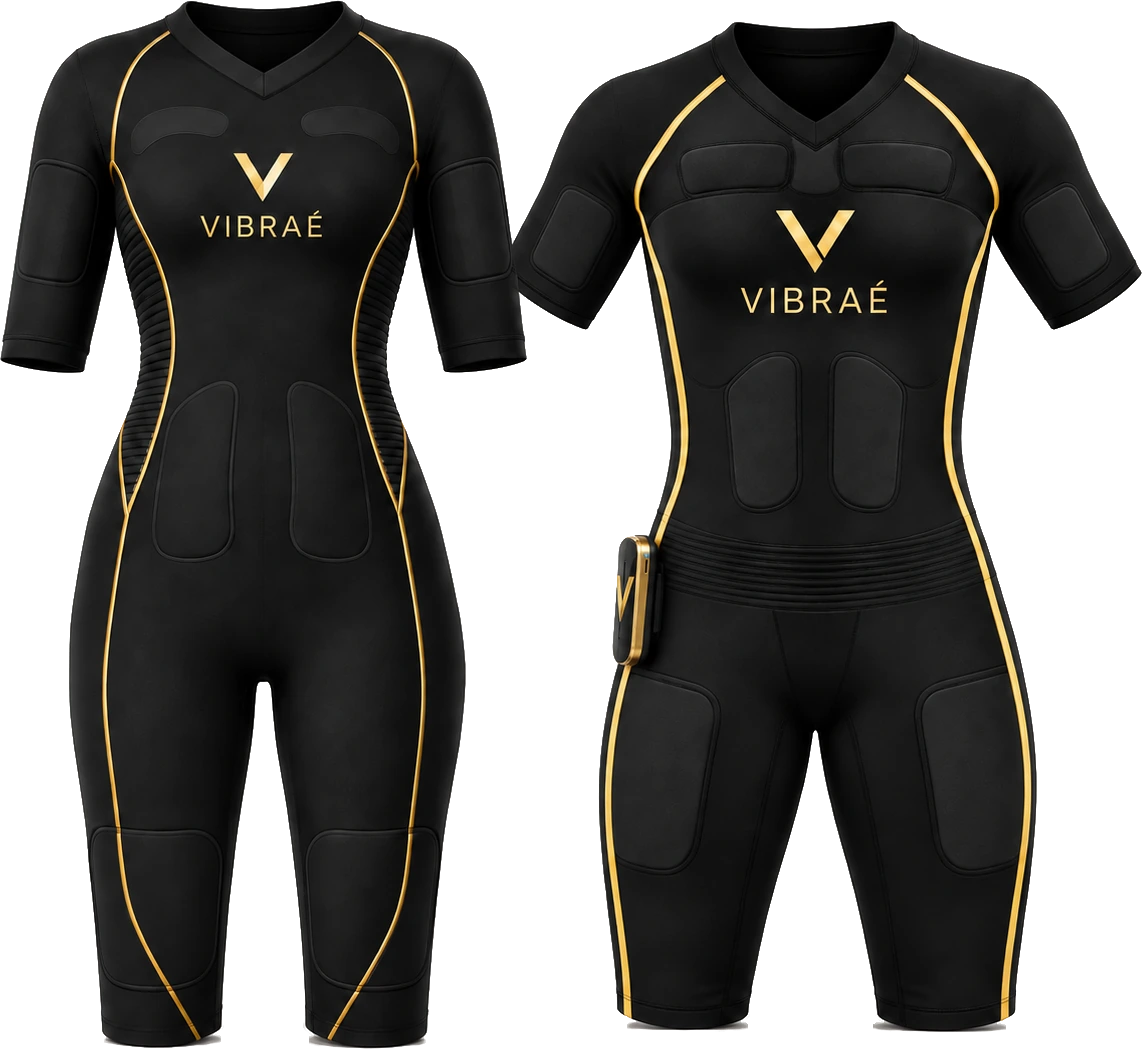
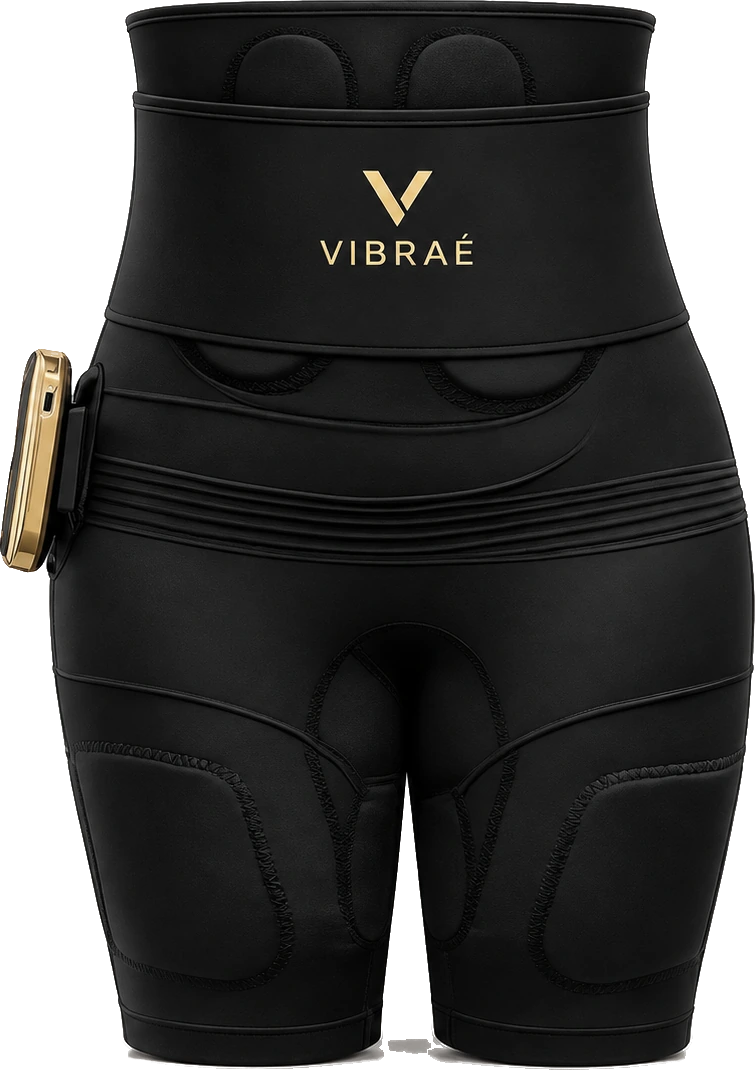
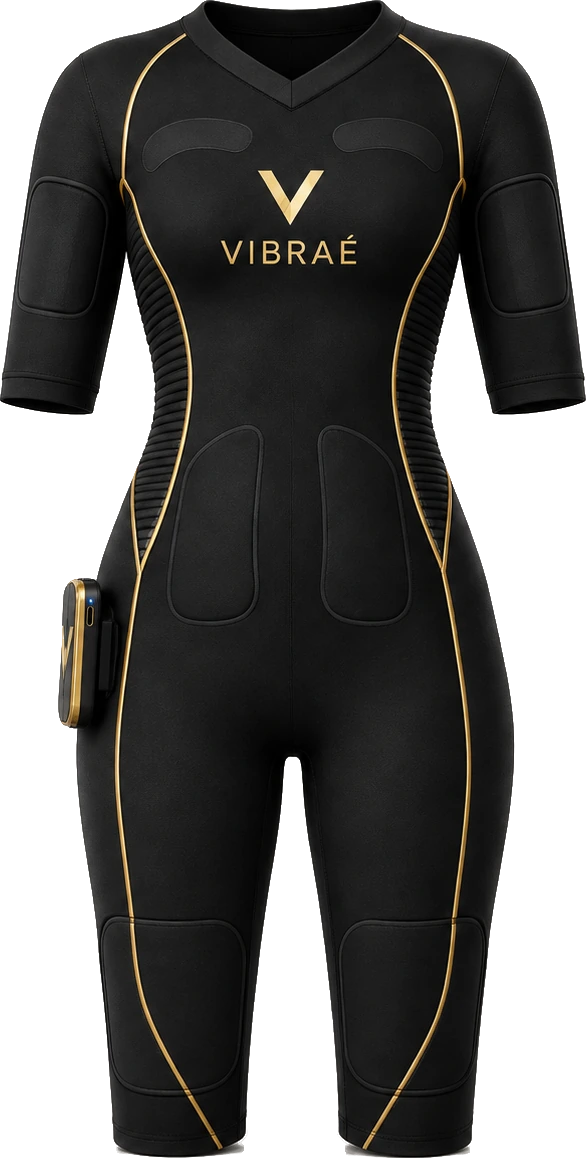
In this context, whole-body EMS systems can serve as a tool for working on several regions at once, provided that the parameters and choice of exercises are subordinated to the rehabilitation goal rather than to maximising sensation.
Circulation, swelling, tissue flow – the role of muscles as a “pump”
After an injury or surgery, one of the main problems is very oftenpersistent swellingand a feeling of „heaviness” in the area. Reduced physical activity impairs the natural function of the muscles as a „pump” for venous blood and lymph.
Neuromuscular electrostimulation, by producing rhythmic muscle contractions:
- increases local blood flow,
- makes venous and lymphatic outflow easier,
- may speed up the „clearing” of metabolic by-products from the tissues.
Studies on acute ankle sprains have shown that NMES used as an addition to standard management (rest, ice, compression, elevation) can reduce swelling, which translates directly into range of motion and functional comfort.
In a broader perspective – as reviews of NMES point out – stimulation can be a valuable addition to therapy wherever healing is hampered by fluid stasis and prolonged restriction of movement.
Here the line between „training” and „physiotherapy” is especially clear: working on oedema and tissue flow requires close cooperation with a doctor and a physiotherapist, particularly where there is a risk of thrombosis, clotting disorders or cardiovascular disease.
Why all of this works, the perspective of clinical guidelines
In an extensive, critical review of the literature, Nussbaum et al. stress thatNMES has the strongest rationale in situations where the patient is unable to generate a sufficiently strong muscle contraction unaided, and the aim is:
- rebuilding muscle mass and strength,
- improved muscle activation during exercise,
- support for function within a broader rehabilitation programme.
The authors also point to several constant elements of effective therapy:
- NMES should be combined with active movement, and not used at rest only,
- the parameters (frequency, pulse duration, intensity) must be chosen so as to produce a clear but tolerable contraction,
- the effects are greatest when the programme lasts a few weeks, not several days,
- the overall load on the body must be taken into account – the level of pain, the state of the nervous system, sleep quality, coexisting conditions.
In that sense EMS is not a „magic shortcut”, buta tool for using movement more precisely and effectively, especially after injuries and procedures.
Summary
If we take as a starting point that the foundation of recovery after an injury is well-planned movement rehabilitation, thenthe role of EMS is to strengthen and direct the effect of that movement where the body objectively has a harder time:
- after knee procedures – in rebuilding quadriceps strength and early recovery of function,
- during periods of immobilisation – in limiting muscle atrophy and preparing the ground for active exercise,
- in recurrent sprains and ankle instability – in strengthening the local stabilisers and improving control,
- in chronic spinal complaints and weakness of key muscle groups – in restoring their role in correct movement patterns more effectively,
- in conditions involving swelling and stasis – in supporting circulation and tissue flow, as a complement to standard methods.
A well-designed process in whichEMS is deliberately woven into the exercise programme, allows the patient not only to regain strength faster, but also to rebuild the cooperation between muscles, joints and the nervous system with greater precision. It is in these areas that electrostimulation has the strongest scientific rationale today – not as an alternative to movement, but as intelligent support for it.
References
- Li Z, Jin L, Chen Z, et al. Effects of Neuromuscular Electrical Stimulation on Quadriceps Femoris Muscle Strength and Knee Joint Function in Patients After ACL Surgery: A Systematic Review and Meta-analysis of Randomized Controlled Trials. Orthop J Sports Med. 2025.
- Kim KM, Croy T, Hertel J, Saliba S. Effects of neuromuscular electrical stimulation after anterior cruciate ligament reconstruction on quadriceps strength, function, and patient-oriented outcomes: a systematic review. J Orthop Sports Phys Ther. 2010.
- Hauger AV et al. Neuromuscular electrical stimulation is effective in strengthening the quadriceps muscle after anterior cruciate ligament surgery. 2017.
- Peng L, Papianou A, et al. Effect of Neuromuscular Electrical Stimulation After Total Knee Arthroplasty: A Systematic Review and Meta-analysis of Randomized Controlled Trials. Front Med. 2021.
- Yue C, et al. Systematic Review of Three Electrical Stimulation Techniques for Rehabilitation after Total Knee Arthroplasty. J Arthroplasty. 2018.
- Dirks ML, Wall BT, Snijders T, et al. Neuromuscular electrical stimulation prevents muscle disuse atrophy during leg immobilization in humans. Acta Physiol. 2014;210:628–641.
- Gibson JNA, et al. Prevention of disuse muscle atrophy by means of electrical stimulation. Lancet. 1988.
- Nussbaum EL, Houghton P, Anthony J, et al. Neuromuscular Electrical Stimulation for Treatment of Muscle Impairment: Critical Review and Recommendations for Clinical Practice. Physiother Can. 2017;69(5):1–76.
- Wainwright TW, et al. Does Neuromuscular Electrical Stimulation Improve Recovery Following Acute Ankle Sprain? A Pilot Randomised Controlled Trial. 2019.
- Wang Y, et al. Neuromuscular Electrical Stimulation of Peroneal Longus Improves Static Balance Control in Young Adults With Chronic Ankle Instability: A Double-blind Randomized Controlled Trial. 2024.
- Saleephon K, et al. Effects of neuromuscular training and electrical stimulation on peroneal muscle strength and ankle stability. 2020.
- Durmus D, et al. Effects of electrical stimulation program on trunk muscle strength, functional capacity, quality of life, and depression in patients with low back pain: a randomized controlled trial. Rheumatol Int. 2009.
- Hicks GE, et al. Trunk Muscle Training Augmented With Neuromuscular Electrical Stimulation Appears to Improve Function in Older Adults With Chronic Low Back Pain: A Randomized Preliminary Trial. Clin J Pain. 2016.
- Aguilar-Ferrándiz ME, et al. Effects of a supervised exercise program in addition to electrical stimulation or kinesio taping in low back pain: a randomized controlled trial. Sci Rep. 2022.
- Reischl S, et al. Application of neuromuscular electrical stimulation during periods of disuse: current evidence and perspectives. 2024.
- Maffiuletti NA, et al. Neuromuscular Electrical Stimulation as a Potential Intervention for Muscle Disuse Atrophy.Front Physiol. 2019.
- Mazloum V, et al. Comparison of the effects of neuromuscular electrical stimulation and other modalities on swelling after ankle sprain. 2023.