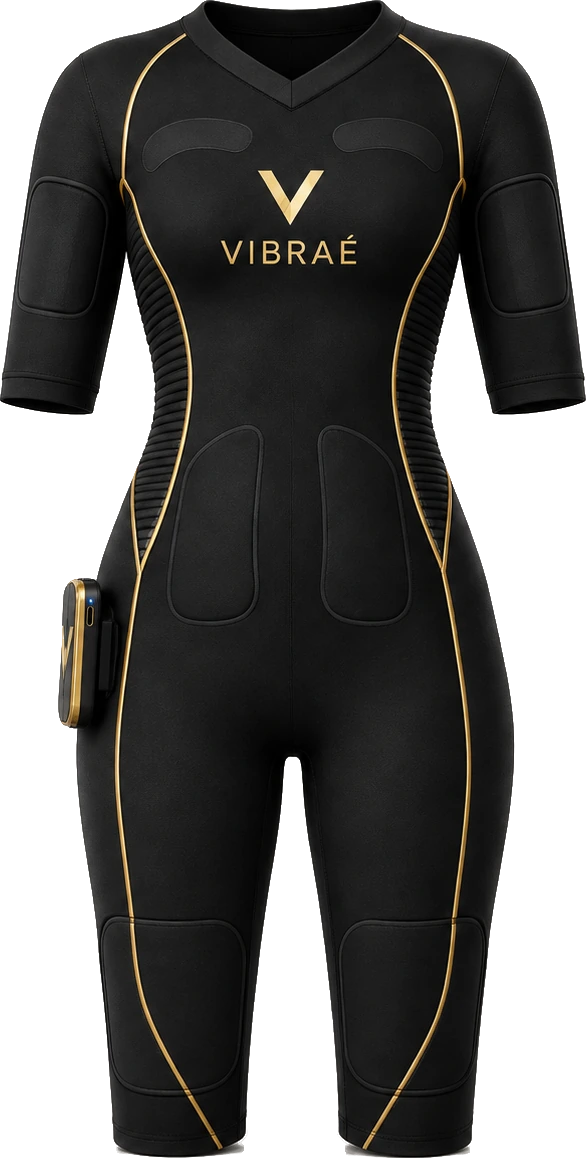
When the first EMS systems came onto the market,wet vests with electrodeswere a breakthrough solution. It was thanks to them that EMS reached training studios, physiotherapy and fitness clubs. In that sense the vest played the role of the „Nokia 3310” – the device that popularised the whole category.
Updated: 14 September 2026
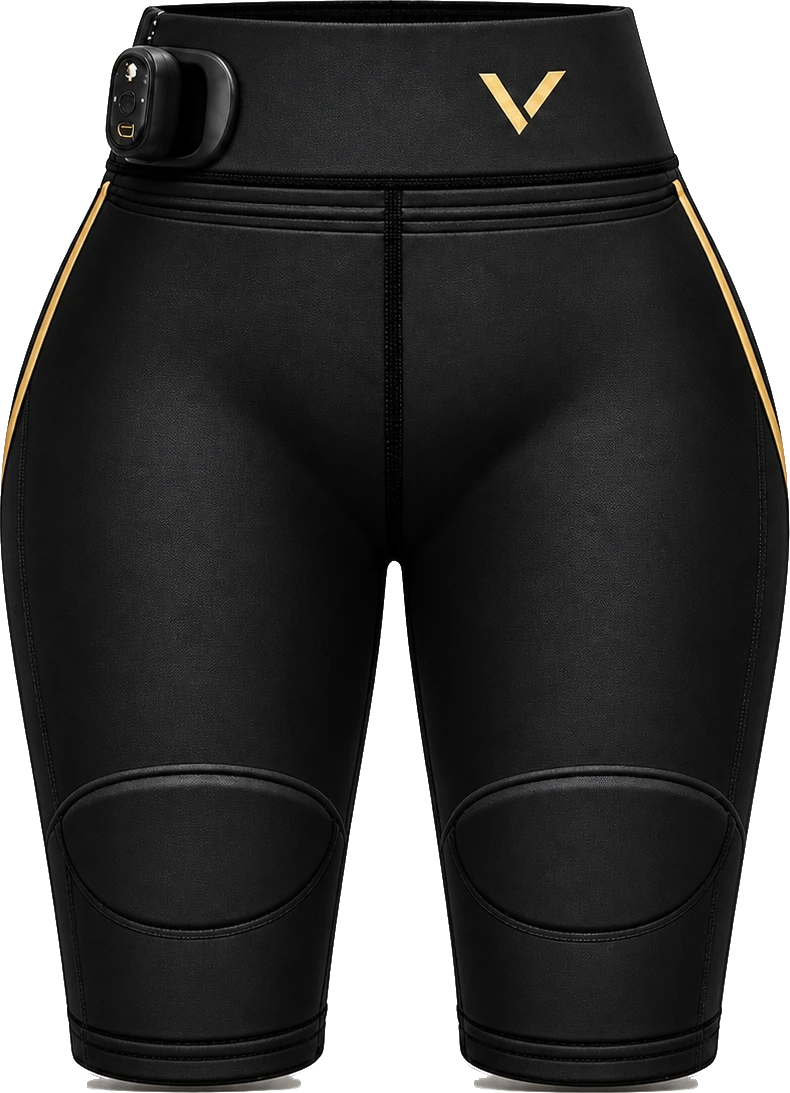
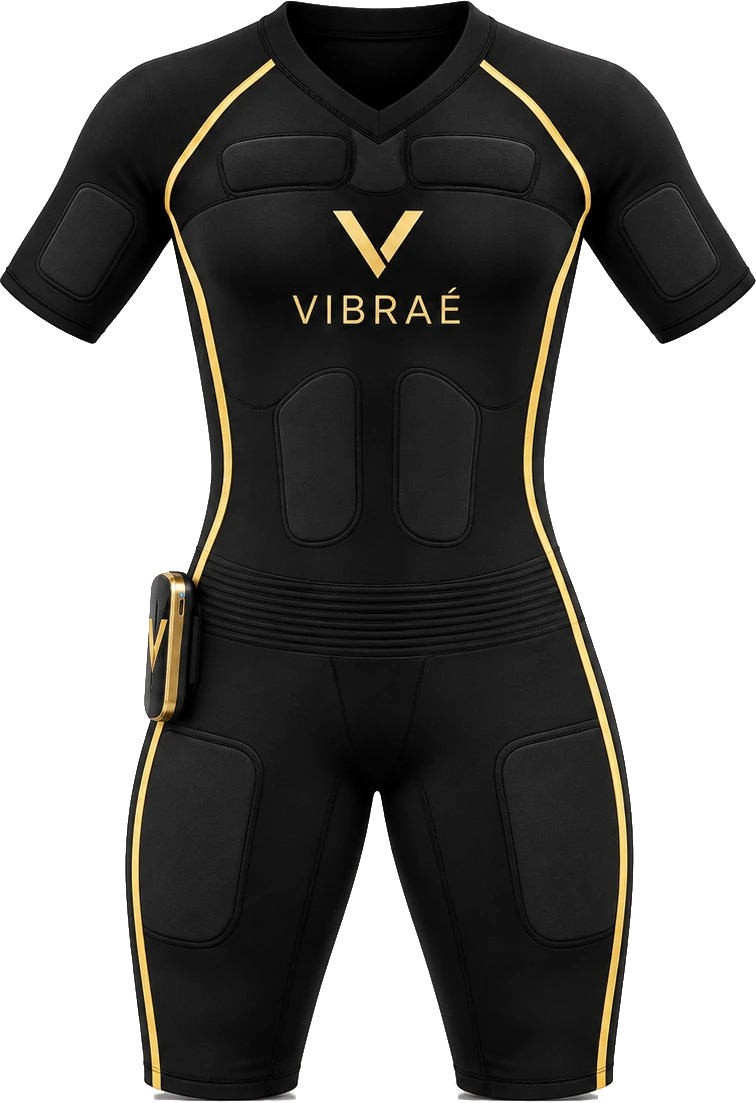
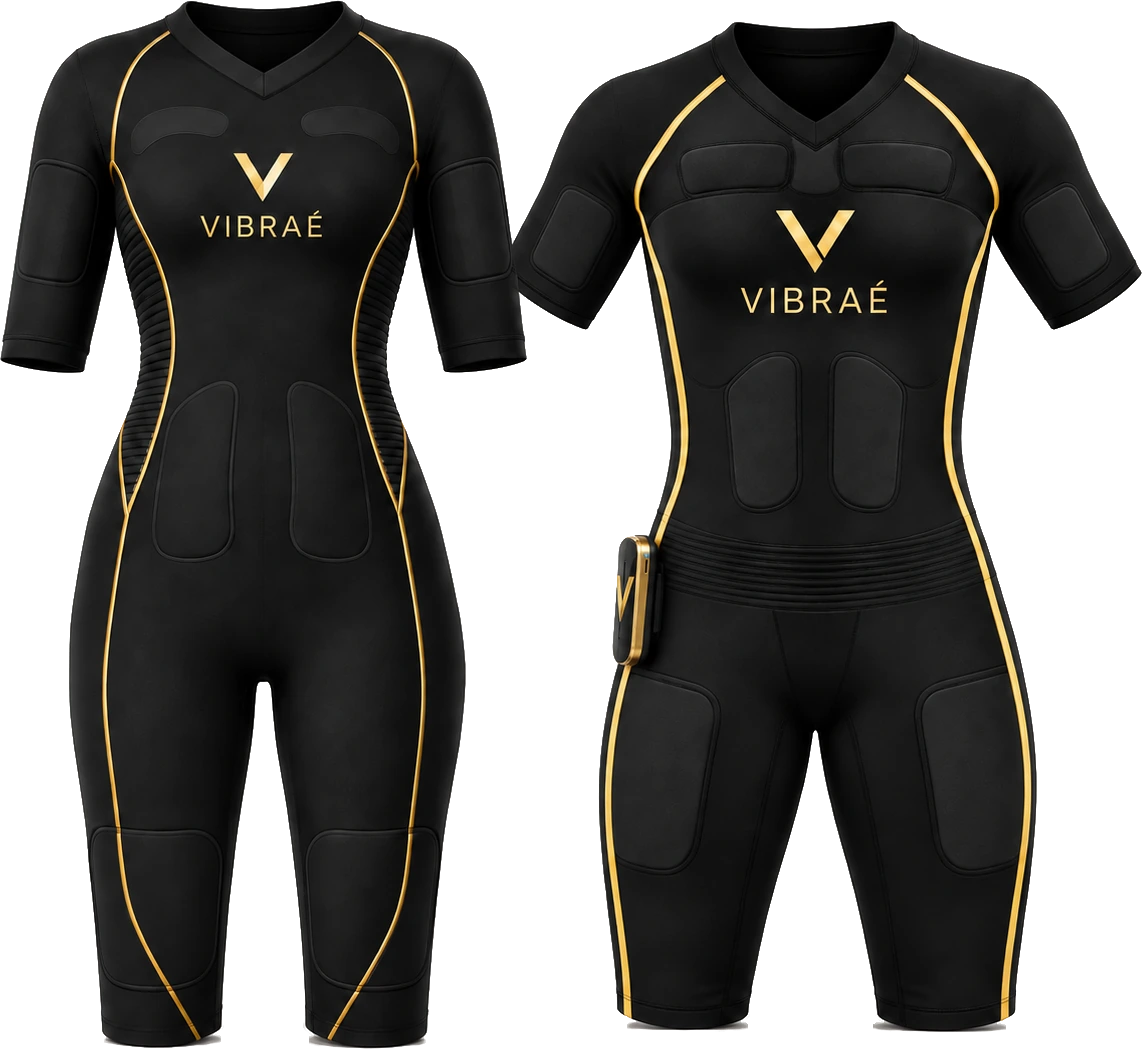
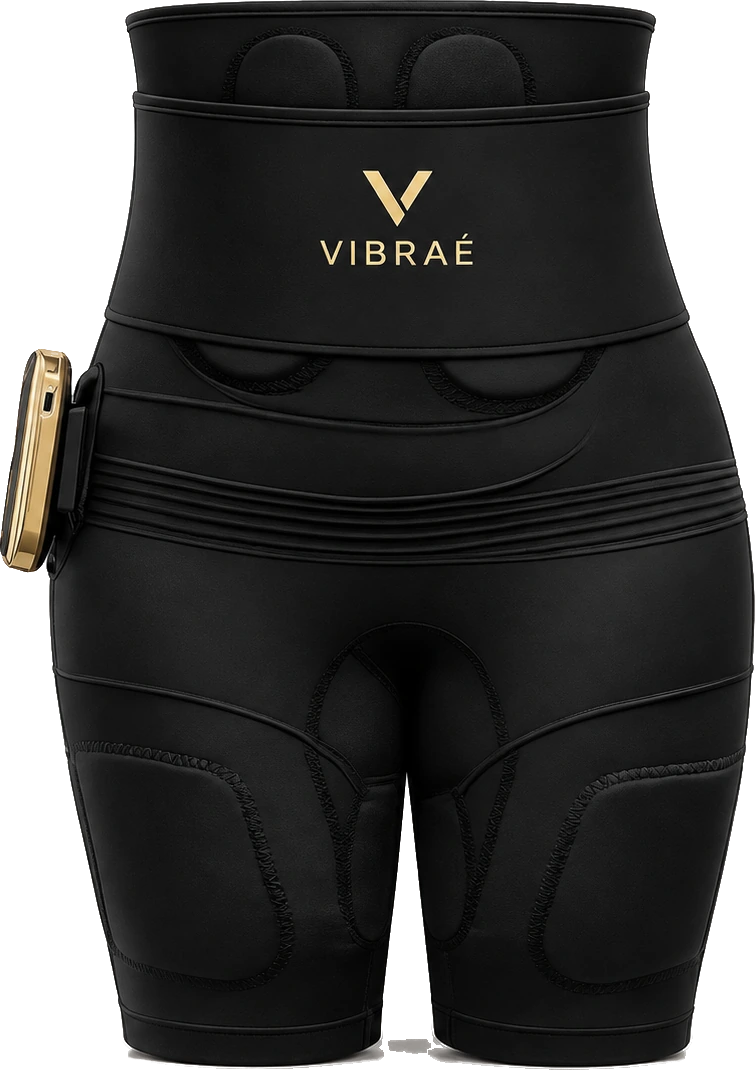
Over the years, however, client expectations, hygiene standards and technological possibilities have changed. Today it is increasingly clear thata dry suitis to the EMS industry what the smartphone became to mobile telephony: the next stage of development, which does not merely „send a signal” but connectsfunctionality, comfort, design and lifestyleinto one coherent whole.
Contents
How the impulse travels: direct contact vs an intermediate layer
In modern dry EMS systems, the suit is put ondirectly onto the body. The electrodes are built into a material that fits closely to the skin and maintains even contact throughout the session – regardless of position, movement and exercises.
In vest systems the typical pattern looks different:
- additional training underwear or a textile layer is put on the body,
- and only then does it reach a wet vest and belts with electrodes, sprayed with water or a conductive fluid.
This has several consequences:
- between the electrode and the skin there is always an intermediate layer,
- the conduction of the impulse depends on, how evenly and thoroughly the garment has been wetted,
- if part of the surface has been sprayed too lightly, some of the electrodes only „come alive” after several or a dozen minutes, once the material soaks through and sweat appears.
In practice this means that the stimulus in the vest isless repeatable and less predictable. A trainer often works not with what was set on the panel in the first minute, but with what “comes through” in the later stages of the session.
A dry suit, sitting directly against the skin, removes the intermediate layer. The impulse is more even from the very start, and its intensity depends above all on the settings rather than on whether the fabric has had time to soak through sufficiently.
Hygiene: myths vs facts
In EMS, hygiene is not an add-on to the service – it is an integral part of it. We work in an environment involving:
- heavy sweating,
- close contact between the material and the skin,
- warmth and moisture, which encourage bacteria and fungi to grow.
In vest systems, maintaining high hygiene standards is difficult at the level of work organisation alone:
- vests and belts absorb water and sweat,
- washing and drying them thoroughly after every session takes time and technical facilities,
- with a busy schedule putting such a model into practice is often simply unrealistic.
As a result, halfway solutions are very often used: a quick spray of disinfectant, a wipe of the surface and the same set is used again. On the level of what is declared, „the vest has been disinfected”. In real terms:
- sweat, shed skin and microorganisms remain within the structure of the fabric,
- with longer use there is a growing risk of irritation, chafing, skin inflammation, and bacterial and fungal infections.
A dry suit is designed from the outset so thatin practice it could often be washed and rotated. The client receives a dry, clean suit, not a cold, wet vest just taken off someone else. From the point of view of skin health and safety this is a crucial difference.
Comfort: a dry body suit versus a cold, wet vest
The client experience beginsat the moment of putting the suit on, before the first impulse even appears.
In a dry system:
- it takes 2-3 min to get dressed before the session
- the client puts the suit on in the changing room, so it takes no time out of the session
- the suit is put on like high-end sportswear,
- the material is dry, thermally neutral and looks good,
- the client has a sense of cleanliness and comfort from the start,
In a vest system:
- the vest is soaked beforehand or sprayed heavily,
- the material is cold, wet and heavy,
- it is especially unpleasant to put such a vest on straight after another client – even if it has been disinfected on the outside, the feeling of damp and cold remains.
While the device is working the differences deepen. In a vest:
- the material can lift away from the body, creating air pockets,
- folds and shifts cause local „concentration” of the stimulus,
- the client then feels burning, stinging or pinpoint prickling, which results from a poor fit rather than from EMS technology itself.
In a dry suit the material lies evenly against the body and the electrodes stay stable. From the start, the impulse isuniform, deep and precise, and the route to higher intensities runs through physiological muscle fatigue, not through fighting skin discomfort.
Working time and ergonomics: up to 10 minutes more real training with a dry system
In the daily practice of a studio or salon, every minute counts.
With vest-based systems part of the session is taken up by technical tasks:
- soaking the vest and belts,
- adjusting straps and fastenings,
- adjusting the position of the material,
- checking which electrodes are already conducting and which are still „waiting” for the material to soak through.
With a dry suit these stages practically disappear. The client:
- puts on the bodysuit,
- clips into the system in one movement,
- can move straight on to the substantive part of the session.
In practice this givesup to 10 minutes saved on every training unit.
For a studio owner this means:
- greater schedule throughput,
- the ability to increase the number of sessions without lowering quality.
For the client:
- certainty that the 20–30 minutes booked are actual working time,
- a sense of a professional, well-thought-out process rather than lengthy „equipment preparation”.
Control modules: a stable construction vs a “flying box”
Differences in ergonomics also show in the way the control modules are mounted.
In many vest systems:
- the modules are relatively large,
- a standing console is used to control the impulse, often connected by a cable (the so-called „umbilical cord”) to the person training, which forces them into a very restricted space with limited scope for movement,
- they are often fixed to the back or in other hard-to-reach places,
- they are not rigidly integrated into the suit, so they tend to „wander” and shift about.
In practice this hinders/causes:
- lying on the back,
- performing exercises in certain planes,
- the control module coming loose during dynamic movements.
In modern dry EMS systems, the aim is:
- compact modules,
- stable mounting,
- a placement that interferes minimally with natural movement.
As a result the suit behaves more like advanced training wear than a wearable device, and the trainer has far more freedom in choosing exercises.
Honestly about the limitations: what about durability?
It is also worth openly noting an aspect that vest manufacturers sometimes raise:
- in classic cable systems, replacing individual wires, looms or components is often simpler,
- in dry suits the wiring is integrated into the material, which often makes repair harder or simply uneconomical.
Both the vest and the suit are subject to mechanical wear. The difference is thatthe dry suit makes up for that potential servicing difficultyvery specific benefits:
- a predictable stimulus and unrestricted freedom of movement.
- a lower price than a vest,
- a higher standard of hygiene,
- better comfort for the client,
- time saved on every session,
- a premium design that sets the studio apart
On the overall balance – particularly for studios and salons that prioritise quality – the advantage of dry systems remains clear and obvious.
Summary: from the pioneering stage to a new standard
Wet vests – soaked systemsplayed an important, historic rolein the development of EMS. They were a pioneering stage that opened the way for the whole industry – just as the first mobile phones opened the way for smartphones.
From the perspective of today's requirements:
- hygiene that is real, not merely declared,
- direct contact between the electrodes and the skin,
- no restrictions on movement,
- the comfort of a dry, close-fitting suit,
- up to 10 minutes saved on every session,
- a stable stimulus and less risk of burning sensations,
- ergonomic, compact control modules
mean thatthe dry suit is the natural evolution of EMS technology.
This is not about belittling what came before. It is about pointing out a fact:
in a world where clients expect effectiveness, hygiene, aesthetics and comfort all at once, the vest system becomes the equivalent of the Nokia 3310 – an important milestone, but nonethelessa solution from the previous generation.
A dry EMS suit is no longer merely „a different way of delivering current”, buta new standard of experience– for the client, the trainer and the studio owner.