The question „how long before you see results” has one answer in advertising material and another in the scientific literature. Advertising works with a single session, research with weeks and months. The difference does not come from bad faith, but from the fact that two different things are being measured: the sensation after a workout and the change in body composition.
Updated: 21 September 2026
The aim of this text is to put one against the other: what happens after the first sessions, what meta-analyses of WB-EMS research show, why fat tissue behaves differently than muscle and how to measure progress at home without mistaking noise for a trend.
A timeline of results
| Result | Kiedy zwykle widoczny | What it depends on |
|---|---|---|
| Sensing the muscles, soreness after the session | after the first sessions | the intensity that has been set, the fit of the suit |
| Muscle control, tension, posture | after several weeks | regularity, exercises performed in the suit |
| Strength | the first changes after a few weeks; in studies measured after 3–6 months | regularity, gradual progression |
| Muscle mass | after several months | regularity, protein intake, sleep |
| Body weight and measurements | depending on the energy balance | a calorie deficit, activity during the day |
| Comfort of the lumbar spine | assessed in the study after 12 weeks | regularity; with undiagnosed pain, a doctor first |
The pace of change depends on the starting point. Someone who has not trained until now usually notices it sooner than someone active for years — and that is not a flaw in the method, only a property of adaptation.
The first sessions: a stimulus, not a result
At the start the stimulation is felt strongly even at low settings, because it simultaneously covers muscle groups rarely engaged consciously: the glutes, the deep abdominal muscles and the muscles along the spine. Soreness appearing over the following days is the norm and passes within a few days.
This, however, is not yet the effect of the training but a sign that the muscles have received a new kind of stimulus. The first weeks are therefore run carefully: lower intensity, a day's break between sessions, full hydration. Very strong, increasing muscle pain or dark urine call for training to be stopped and a doctor contacted — we described this in the article contraindications to EMS training.
A few weeks: control and tolerance of the stimulus
With two or three sessions a week, after a few weeks it is above all the quality of the work that changes: it is easier to keep an upright posture, the exercises in the suit flow more smoothly and muscle tone is more distinct. Tolerance of the stimulus also grows — the same setting feels calmer, which allows gradual progression. This is the right moment for the first comparative measurements.
Months: strength and muscle mass
Changes measurable in a laboratory — gains in strength and muscle mass — were usually assessed in WB-EMS studies after 12–26 weeks of regular training. That is an honest perspective for any form of resistance training: the effect is counted in months, not in sessions.
What the research shows
| Study | Uczestnicy | Czas | Result |
|---|---|---|---|
| Kemmler et al., 2021 (a meta-analysis of 16 studies) | 897 adults, previously untrained | 6–54 weeks, most often 12–26 | muscle mass on average about +0.9 kg, an increase in leg and trunk strength; the change in fat tissue not statistically significant |
| Rodrigues-Santana et al., 2023 (a meta-analysis of 26 studies) | 1,183 people | differently in individual studies | an increase in muscle mass and strength; the quality of the evidence rated as low |
| Kemmler et al., 2016 | 48 men, aged 30–50 | 16 weeks | fat-free body mass +0.93% (WB-EMS) versus +1.25% (strength training), leg strength +7.3% versus +12.7%; the differences between groups not significant |
| de Oliveira et al., 2022 (a meta-analysis of 13 studies) | people over 60 | differently in individual studies | an improvement in the sarcopenia index, leg strength, grip strength and walking speed; no effect on waist circumference |
| FORMOsA, 2016 | 75 women over 70 | 16 weeks | muscle mass +2–2.5%, fat tissue without significant change |
| Micke et al., 2021 | 240 people with chronic lower back pain | 12 weeks | a reduction in pain of about 30%, comparable to classic strengthening exercises |
Two things are worth taking from this overview. First, the direction of change is consistent: WB-EMS increases strength and muscle mass in previously untrained people. Second, where it was compared directly with heavy resistance training, the effects were comparable, not better — the advantage of the method lies in its availability and the low load on the joints, not in greater effectiveness.
EMS and weight loss
During a session the muscles work and use energy, but body weight depends on the balance of the whole day and week. In a meta-analysis of WB-EMS research the effect on the amount of fat tissue was not statistically significant, and some of the studies combined training with a dietary intervention. The conclusion is clear: electrostimulation can support fat loss, because it helps build and maintain muscle, but it does not replace a calorie deficit.
That is why the Vibraé Home sets include six months of nutrition plans in the app — the same app in which the workouts are run.
Why the numbers for calories burned differ so much
- Szacunek zamiast pomiaru. Most of the published values come from calculators or watches counting from heart rate, not from a measurement of oxygen consumption.
- Different programmes. A strength session in motion and a recovery programme lying down are a completely different energy expenditure.
- Different people. Body weight, the amount of muscle and the intensity that has been set all change the result.
- Marketing. In an advertisement the upper end of the range looks better.
For this reason we do not give a single number. What is meaningful are indicators measurable in a particular person: measurements, strength and the trend in body weight over several weeks.
Brzuch, uda, cellulit
Local reduction of fat tissue. There is no evidence that an electrode placed on the abdomen causes fat to be burned in precisely that area — the body draws energy from reserves throughout the body. In a study with local stimulation of the abdominal muscles the waist circumference decreased, but tomography showed no significant loss of fat tissue. More strongly toned muscles change the circumference and the silhouette even without fat loss — that is a real change, just of a different kind than burning.
Cellulite. Studies on WB-EMS have not assessed this parameter, so there are no hard data. The appearance of the skin on the thighs and glutes depends simultaneously on the amount of fat tissue, muscle tone, circulation, hormonal balance and genetic factors. Electrostimulation is one element in that system, not a separate treatment with a predictable outcome.
Why some people see no changes
- Niezmieniona dieta. With a fat-loss goal, muscle training alone will not make up for the energy balance.
- Inconsistency. A few sessions, two weeks' break and starting over. Muscles respond to a stimulus repeated over months, not to bursts.
- Too low an intensity. A barely perceptible contraction is too little; progression consists in gradually raising the settings in each group separately.
- Too hard and too fast. Very strong soreness after the first sessions knocks you out of rhythm and ends in a break — a gentle start gives more, because it lets you keep the regularity.
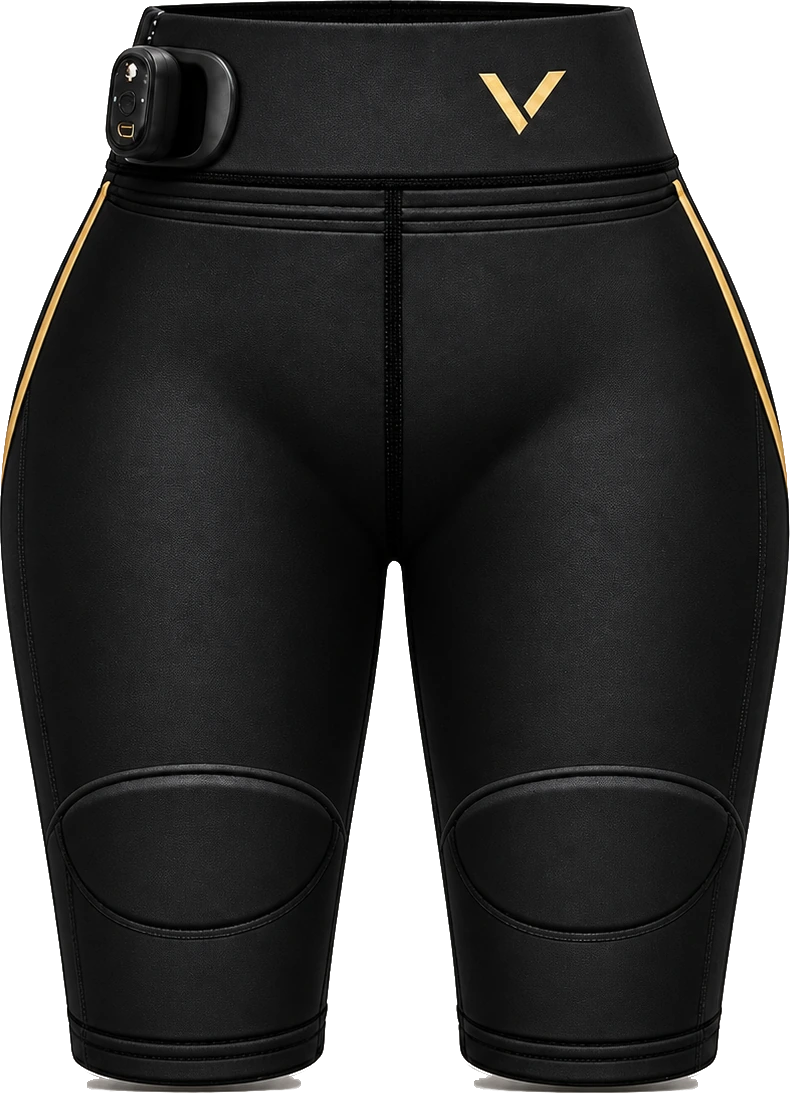
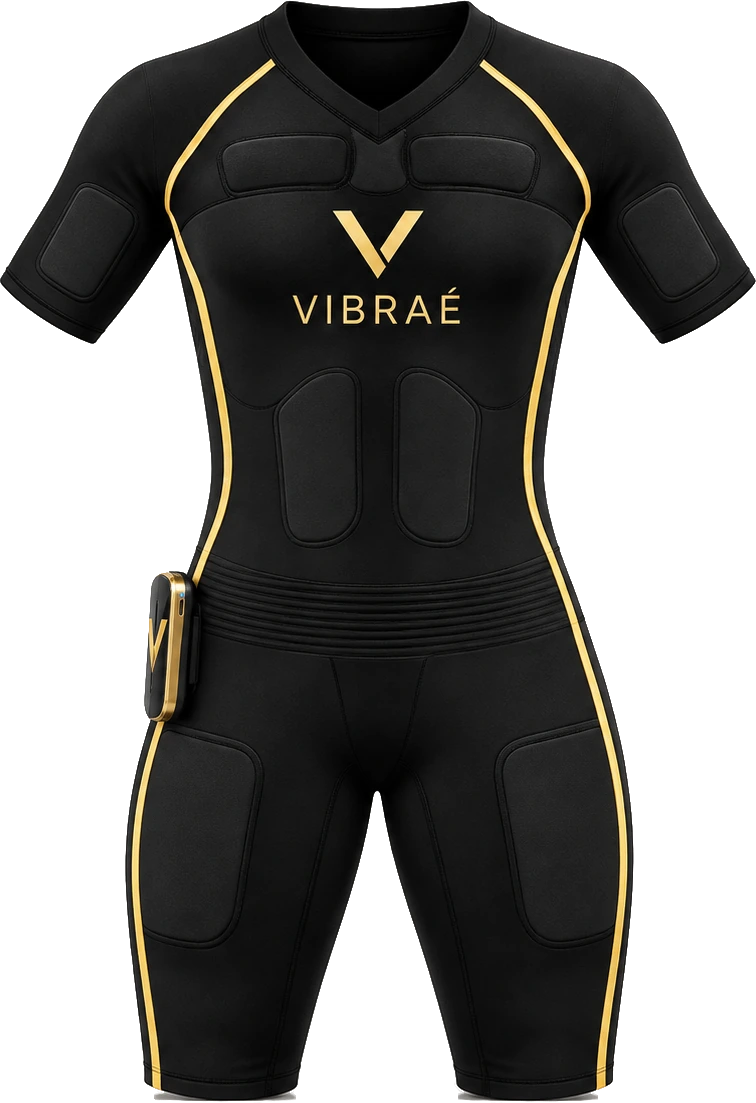
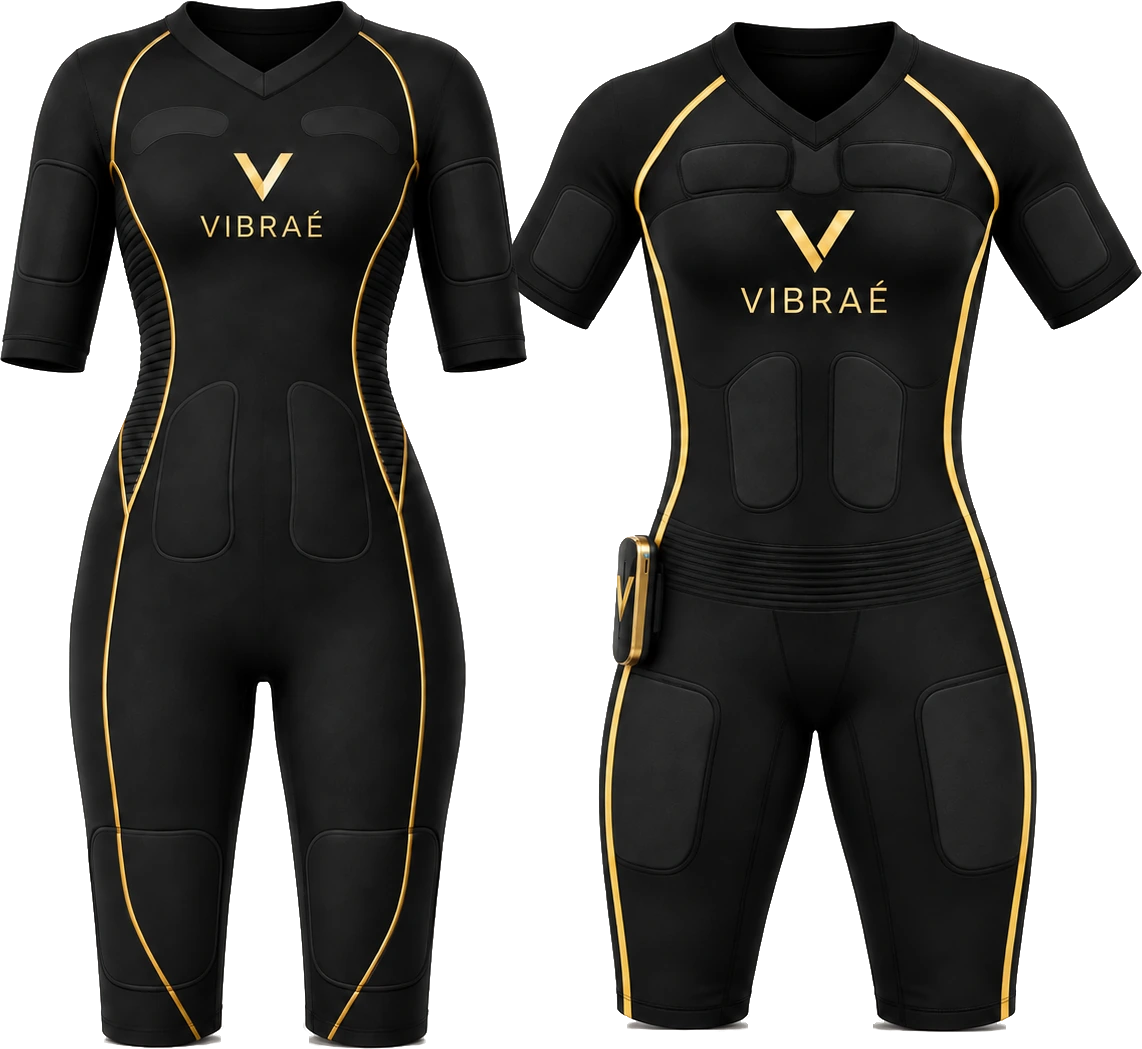
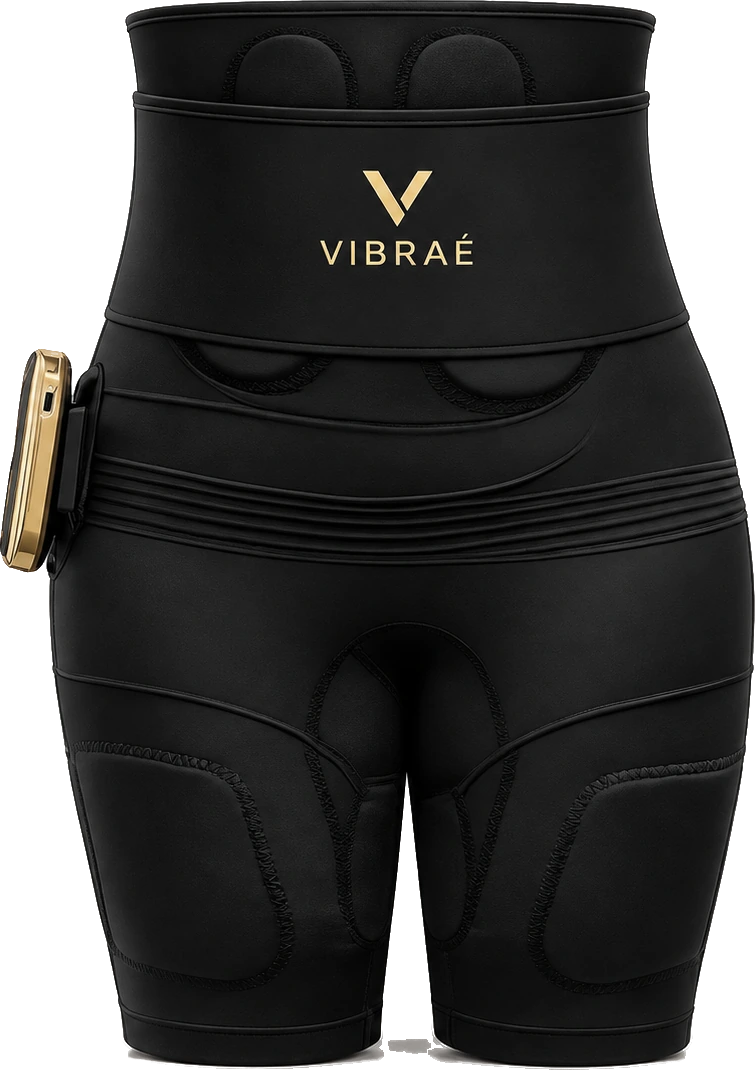
- A suit that does not lie close. Too loose a size or an unfastened belt lower the quality of the stimulus in some of the zones.
- The wrong measure. Body weight can stand still while muscle is gained and measurements go down.
- Sama stymulacja, bez ruchu. What gives most is combining exercises in the suit, daily activity and sleep.
How to measure your progress at home
The starting point is a measurement taken before the first session — without it there is nothing to compare after two months.
- Measurements every 2 weeks — in the morning, before breakfast, with the same tape and at the same spots: waist at navel height, hips, thigh, arm.
- Photos every 4 weeks — front, side and back, in the same place, light, time of day, clothing and position.
- A simple strength test every 4 weeks — the number of stands from a chair without using the hands in 30 seconds and the time a plank is held.
- Body weight once a week — at the same time of day, judging the trend over several weeks and not a single measurement.
- How you feel — the quality of sleep, the level of energy, the state of the back after a day of sitting work.
Sessions and measurements are recorded by the Vibraé Home app, and in the Vibraé EMS app the intensity is set separately for each muscle group, which makes it possible to progress zone by zone. A description of the system can be found on the page Vibraé Home Edition.
How to hold on to your results
Strength and muscle mass are not won once and for all — after a longer break they drift back towards the starting point, exactly as with any other training. Five things help to keep them:
- Regularity over intensity. Calm work throughout the year gives more than one very intense month.
- A change of stimulus. Every few weeks a different programme, different exercises in the suit or higher settings.
- Protein and sleep. Adaptacja zachodzi poza treningiem.
- Movement outside the session. Walking, cycling and swimming complement the work in the suit.
- A gentle return after a break. After a holiday or an illness you start from lower settings.
Uczciwie o ograniczeniach tych danych
- The quality of the evidence is sometimes moderate. The authors of one of the meta-analyses themselves rated it as low — the direction of change is consistent, but the effect sizes should be treated with caution.
- Badania prowadzono pod nadzorem. The sessions took place in research centres and studios, with a trainer selecting the parameters. In home training the result depends on whether the plan and the progression are actually maintained.
- The effects are moderate. A gain of the order of one kilogram of muscle mass in a study lasting several months is a real result, but far from the promises in advertisements.
- Not every parameter has been studied. For some popular expectations — such as an effect on cellulite — there is simply no data, and it is better to say so plainly than to fill the gap with guesswork.
When choosing equipment these texts will help EMS for home — which suit to choose and how much it really costs and the categories EMS suits i EMS shorts. How to lay out the week and run a session we described in the article EMS training at home.
References
- Kemmler W, et al. Effects of whole-body electromyostimulation on body composition and muscle strength in non-athletic adults: a systematic review and meta-analysis. Front Physiol. 2021;12:640657.
- Rodrigues-Santana L, et al. Effects of whole-body electromyostimulation on physical fitness and health markers: a systematic review and meta-analysis. 2023.
- Kemmler W, et al. Whole-body electromyostimulation versus high-intensity resistance exercise: effects on body composition and strength. 2016.
- de Oliveira TMD, et al. Whole-body electromyostimulation in older adults: a systematic review and meta-analysis. 2022.
- Kemmler W, et al. Whole-body electromyostimulation and protein supplementation in elderly women (FORMOsA study). 2016.
- Micke F, et al. Effects of whole-body electromyostimulation versus conventional back-strengthening exercise on chronic non-specific low back pain. 2021.
- Kemmler W, et al. Position statement and updated international guideline for safe and effective whole-body electromyostimulation training. Front Physiol. 2023;14:1174103.
How soon do you see results from EMS training?
Muscle awareness and soreness appear after the first sessions, better control and muscle tone after a few weeks, and changes in strength and muscle mass measured in studies — after 12–26 weeks of regular training.
Does EMS training help you lose weight?
It supports fat loss, because it helps build and maintain muscle, but it does not replace a calorie deficit. In a meta-analysis of studies on WB-EMS the effect on the amount of fat tissue was not statistically significant, and some of the studies combined training with a dietary intervention.
By how much does muscle mass grow with EMS training?
In a meta-analysis of 16 studies covering 897 previously untrained people, the gain in muscle mass averaged about 0.9 kg, together with an increase in leg and trunk strength. That is a real effect, but a moderate one.
Is EMS more effective than the gym?
In a study comparing both forms in 48 men aged 30–50, after 16 weeks the differences in fat-free body mass and leg strength between the groups were not statistically significant. The effects are comparable, and the advantage of EMS remains its availability and the low load on the joints.
Does EMS burn fat from the abdomen?
There is no evidence for local fat reduction — the body draws energy from reserves throughout the body. In a study with local stimulation of the abdominal muscles the waist circumference decreased, but tomography showed no significant loss of fat.
Ile kalorii spala sesja EMS?
We do not give a single figure, because published values most often come from estimates rather than from measuring oxygen consumption, and depend on the programme, body weight and the intensity set. What is reliable are circumferences, strength and the trend in body weight over several weeks.
Why am I not seeing results despite regular sessions?
The most common causes are an unchanged diet when the goal is fat loss, irregularity, too low an intensity, too loose a suit and measuring progress solely by body weight, which can stand still while muscle increases and circumferences fall.
Does EMS help with back pain?
In a study involving 240 people with chronic, non-specific low back pain, after 12 weeks the pain decreased by about 30% — comparably to classic strengthening exercises. That is the result of a study, not a promise: the Vibraé suit is not a medical device, and with undiagnosed pain the first step belongs to a doctor or a physiotherapist.