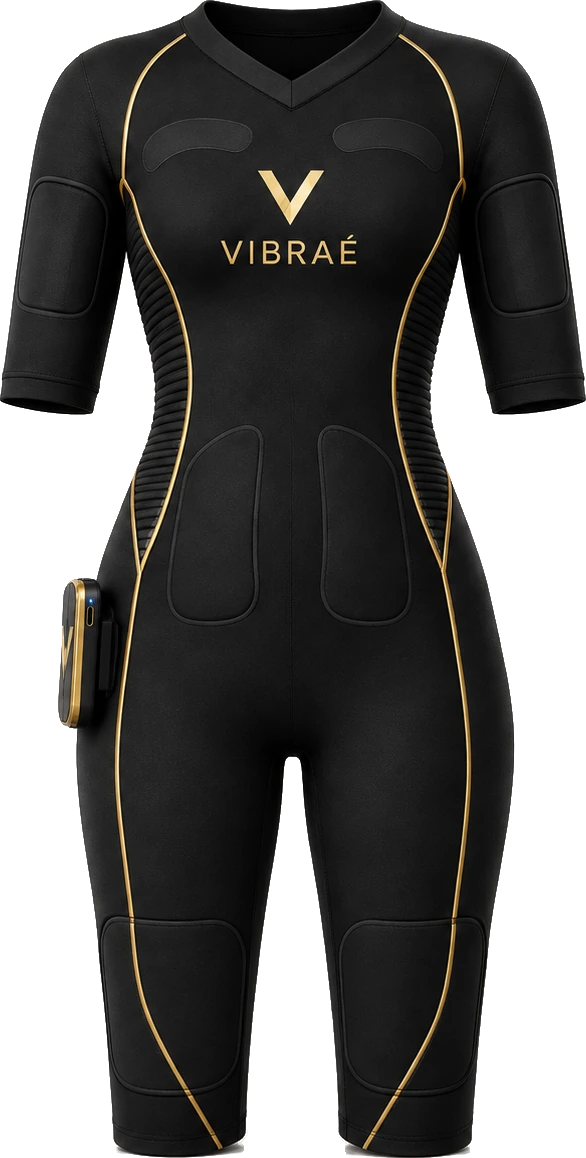
Under the heading „home EMS” shops today sell equipment differing in price by a factor of thirty: from abdominal belts for a few hundred zloty to whole-body systems for over ten thousand. This is not the same product in several price variants — these are different categories of device that solve different problems.
Updated: 23 September 2026
The aim of this text is to sort out these categories, to calculate the real cost of a single session in three variants — purchase, rental, sessions in a studio — and to point out the criteria that matter in use, not only in the catalogue.
When EMS at home makes sense and when it does not
Ma sens, when training is meant to be regular and the barrier is the commute and a rigid schedule; when more than one person at home is to use the equipment; when the plan and consistency can be kept on one's own.
It makes no sense, when there are contraindications to electrostimulation — we gathered the list in the article contraindications to EMS training; when the expectation is a result without changing the way of eating and without movement; and when a person leading each session is needed — then the right choice is a studio.
Categories of EMS equipment for home use
| Equipment type | Zakres pracy | Approximate price |
|---|---|---|
| EMS belt or band | one muscle group, most often the abdomen | approx. PLN 100–500 |
| Electrostimulator with stick-on electrodes | single muscles, recovery | approx. PLN 200–1,500 |
| Wired suit or vest | several muscle groups at once, in one place | from a few thousand PLN |
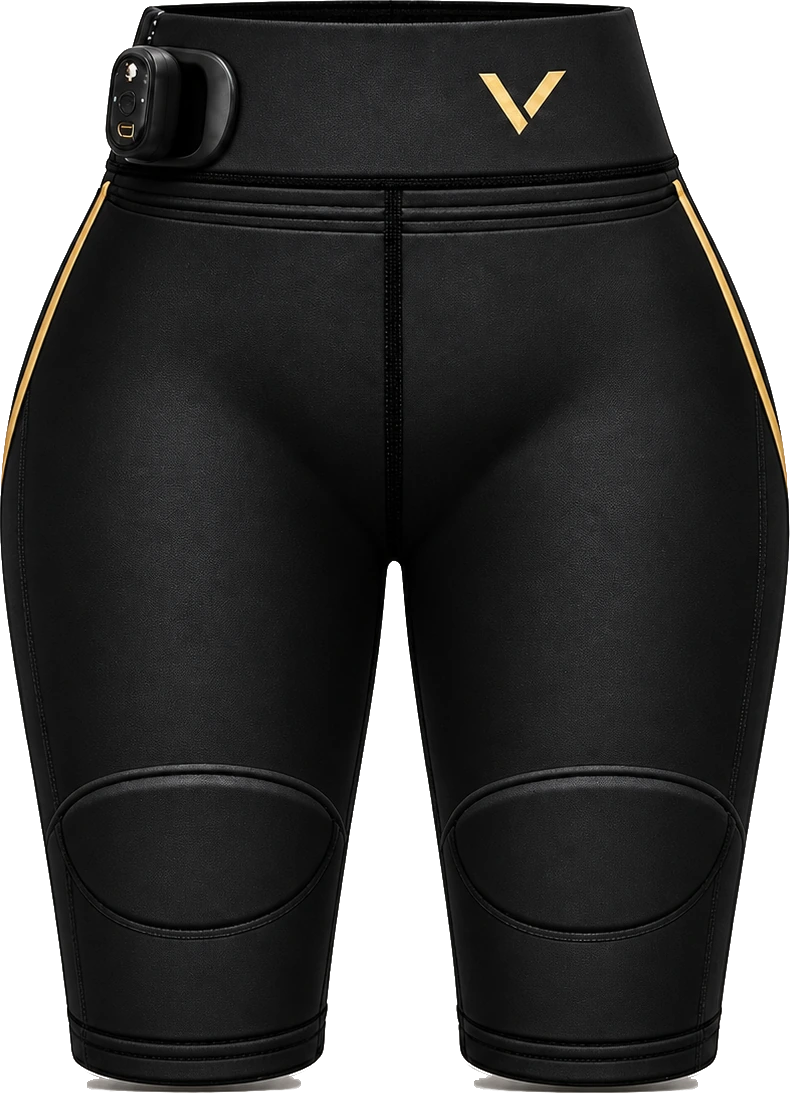
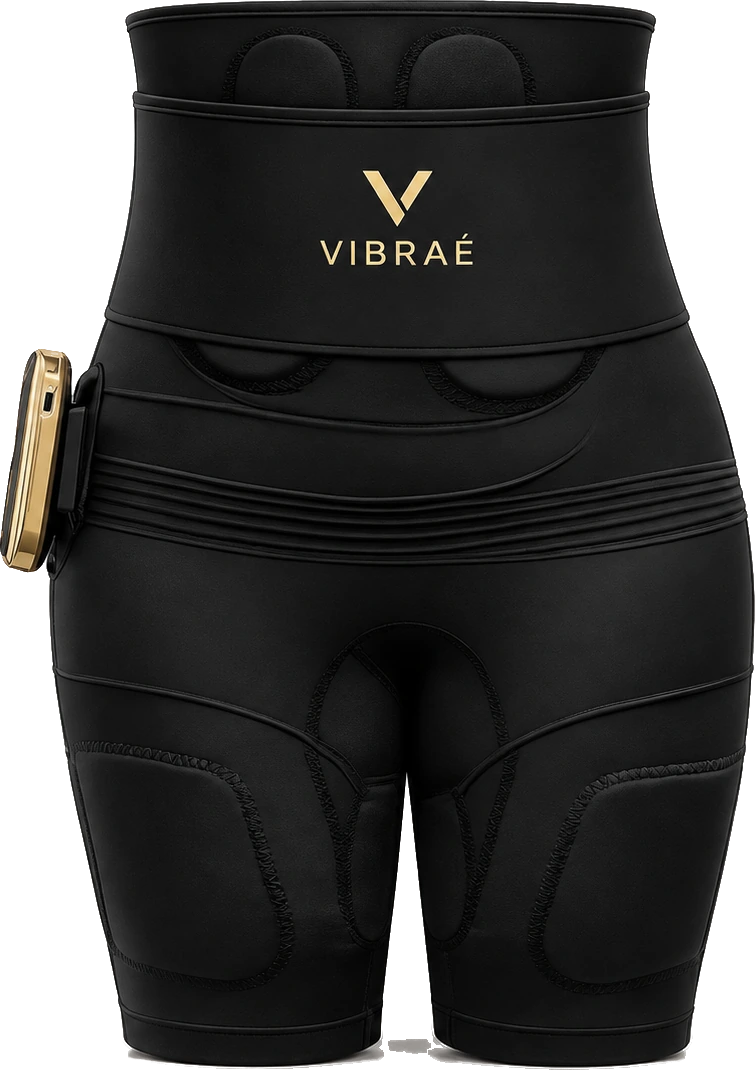
| Wireless EMS shorts | the glutes and thighs, and depending on the model also the abdomen and the lower back | approx. PLN 6,000–14,000 |
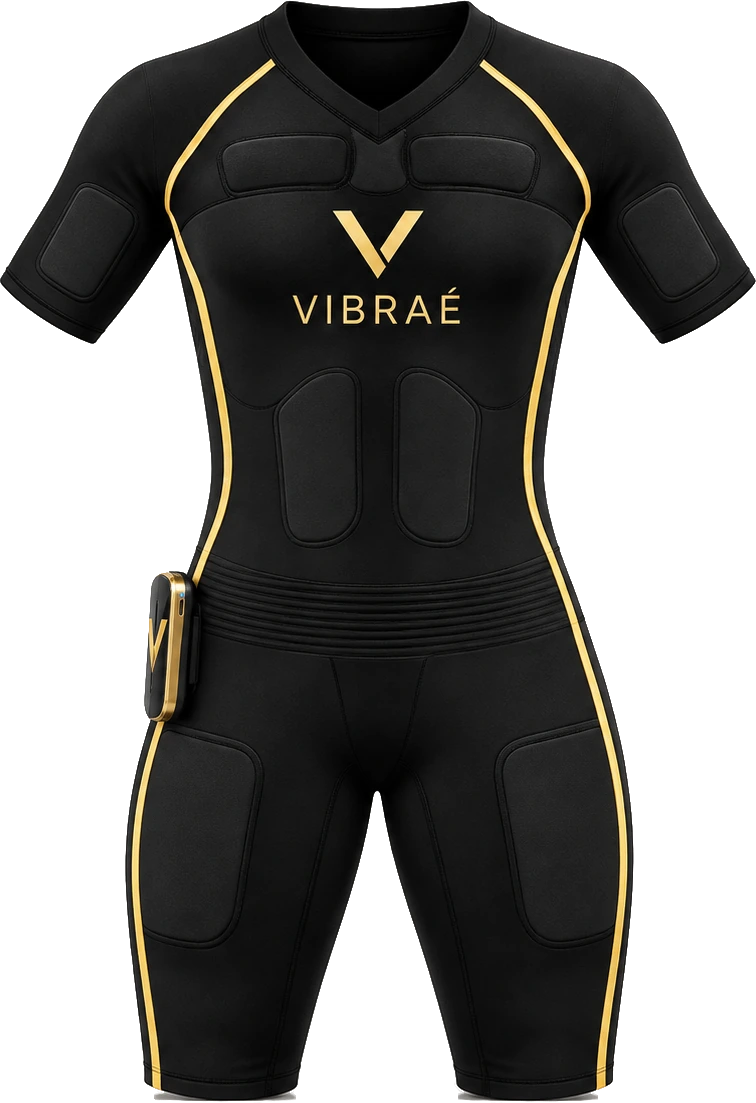
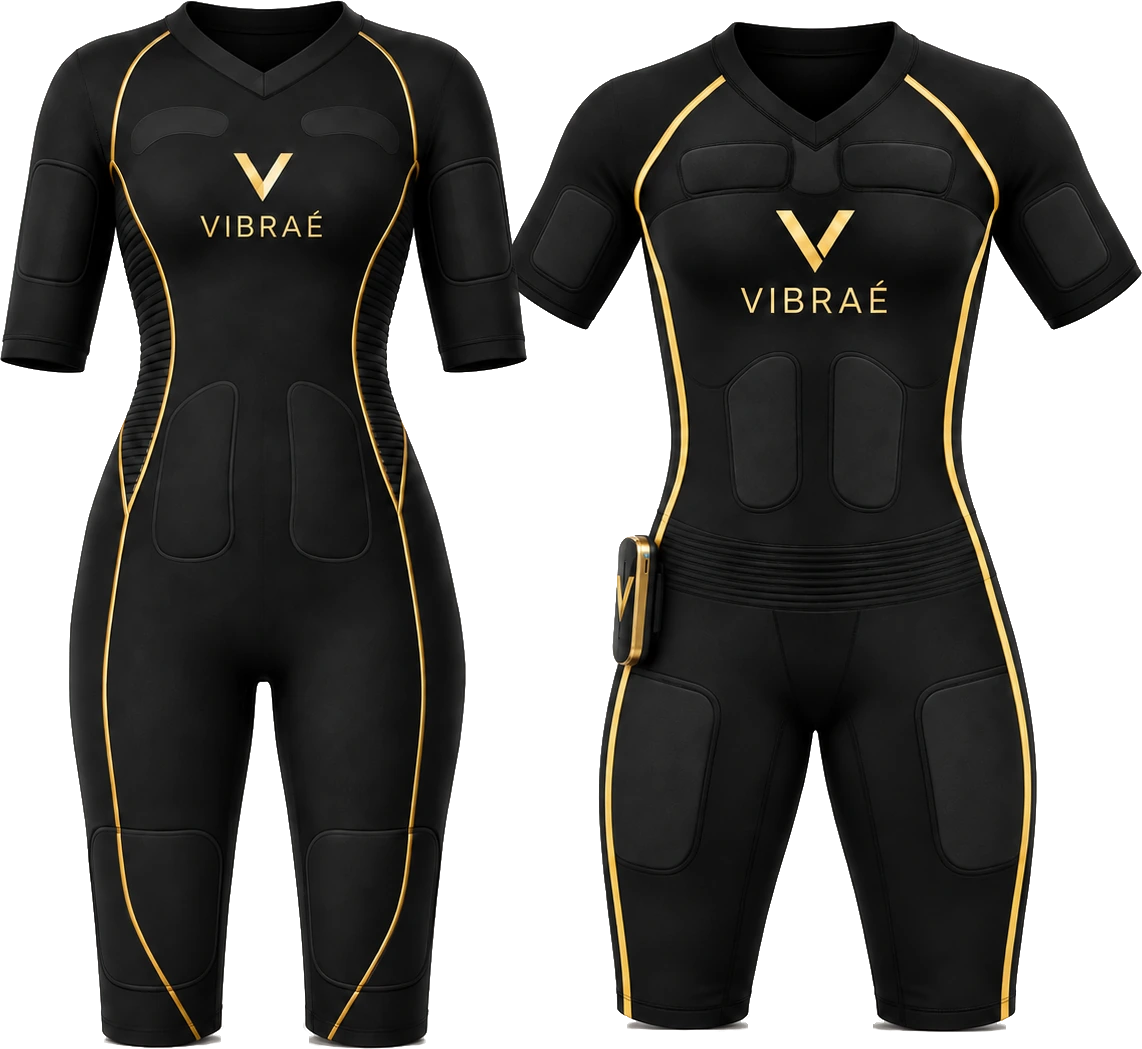
| Wireless full-body suit | all the main muscle groups in one session | approx. PLN 4,000–17,000 |
Indicative prices from Polish shops, September 2026. The difference between a belt and a suit is not a difference in quality within one category. A belt works on one muscle group and has a few electrodes; a suit covers the whole body, has independent zones and software that guides the session. Comparing them on price alone leads to disappointment on both sides.
What makes up the price of a suit
- The number of electrodes and independent zones — and whether the intensity is set for each of them separately.
- Controller — the capacity of the battery, the way of charging and of fixing it in the suit.
- Software — whether the app is a remote control for the power, or whether it runs the session, records the history and builds the plan.
- Set contents — the number of suits, the accessories, access to the app with no subscription.
- Warranty and service — separately for the suit and for the electronics, and the procedure in case of a repair.
For reference, prices at Vibraé: the set with Mini shorts PLN 6,150, with the Body suit PLN 15,449, with Slim shorts PLN 15,999, the couples set with two Body suits PLN 16,949. The purchase can be spread into instalments — for the Body suit the instalment starts at PLN 410 per month, and the terms are chosen at the time of ordering.
The reach of the electrodes, the sizes available and the full contents of the set are described on the Slim shorts page.
Rental, instalments or purchase
Rental of a whole-body system usually costs 500–1,000 PLN a month on the market, and the rate falls with the length of the agreement. It is a sensible way of checking the method for a month or two. Over a year of renting, the total reaches 6,000–9,000 PLN, and after two years it approaches the purchase price — with the difference that the equipment goes back to the rental company.
Instalments spread the cost in a similar way, but the equipment belongs to the buyer from day one.
An outright purchase is the cheapest per workout, assuming the equipment will be used for longer than a year.
Items worth asking about before buying
- A second suit. The suit adjusts to the figure, so a second person needs their own size.
- App subscription. With some manufacturers it is paid for separately. At Vibraé the apps are included in the price of the set.
- The warranty on the suit itself. It is sometimes shorter than on the electronics. At Vibraé the suit and the controller each have 12 months.
- Zmiana rozmiaru. At Vibraé, exchanging for another size is free for three months from purchase; the cost of shipping remains.
- Service. Who sends the equipment and how long the break in use lasts.
- Durability in the wash. The way of washing and whether the electrodes are sewn in permanently.
The cost of one workout: buying, renting, a studio
The assumptions of the calculation: one person, two sessions a week, that is about 104 sessions a year. For the couples' set, two people are counted. The studio and rental rates are market ranges; the purchase prices come from the Vibraé price list.
| Option | After 12 months | After 24 months | After 36 months |
|---|---|---|---|
| An EMS studio (120–150 PLN per session in a package) | 120–150 zł | 120–150 zł | 120–150 zł |
| Rental (PLN 500–750 a month) | PLN 58–87 | PLN 58–87 | PLN 58–87 |
| Body suit purchase (PLN 15,449) | 149 zł | 74 zł | 50 zł |
| Couples set purchase (PLN 16,949, two people) | 81 zł | 41 zł | 27 zł |
Four conclusions follow from this comparison:
- In the first year the purchase, per workout, costs roughly the same as sessions in a studio. The advantage appears from the second year.
- With two people at home the break-even point comes soonest — the second suit costs a fraction of a second pass.
- Renting works well as a test of the method; with longer use it is a fee for equipment that does not stay with the user.
- The calculation leaves out the time and cost of travelling — and for many people that is the main argument for training at home.
With three sessions a week the cost of a single session on your own equipment falls by about a third.
Nine criteria for choosing a suit
- A dry or a wetted electrode. The dry design requires neither water nor gel, so the session starts as soon as the suit is on, and the stimulus is repeatable from the first minute. Details in the article wireless EMS suit.
- Wireless or cabled. A wireless construction lets you exercise, walk and change position; a cabled system ties you to a station.
- Full body or shorts. Body covers the back, abdomen, glutes, thighs and arms. Slim works on the abdomen, lower back, thighs and glutes, Mini on the thighs, glutes and love handles — the simplest way into the method.
- Zakres pracy oprogramowania. What matters is the plan, the rhythm of the sessions and the record of history, not the power slider itself. At Vibraé there are two apps: Vibraé EMS with 21 programmes, 8 treatments and custom sequences, and Vibraé Home with a training plan, reminders and measurements.
- Independent regulation by muscle group. The thighs tolerate higher values than the abdomen or the arms; one shared regulator is always a compromise.
- Sizes and the terms of exchange. The size chart, the cut variants, the way of exchanging a size after purchase.
- Warranty, service, returns. A separate warranty on the suit and the controller, the course of a repair, and 14 days to withdraw when buying online.
- Support at the start. Instructions for the first session, a plan for the first weeks and a real contact to someone who will answer a question.
- The version for two people. With two people training, the couples' set works out cheaper than two separate sets.
Training at home vs. training in a studio
| Area | EMS suit at home | EMS studio |
|---|---|---|
| Cost per session | falls with every month of use | ongoing, paid per session or per pass |
| Who runs the session | the plan in the app, the intensity set by the user | the trainer, the intensity from the panel |
| Hours | dowolne | according to the studio's schedule |
| Travel | none | at every session |
| Number of people | a whole family, each in their own suit | each person pays separately |
In a studio, the trainer corrects the technique and watches the intensity. At home that role is taken over by the plan in the app and by the user's attentiveness — which is why the start should be gentle and the intensity should grow over weeks, not during the first session.
The first week with your own set
- Przymiarka. The suit should lie close but not press. The wrong size is exchanged before the first workout, not after it.
- Preparing the equipment. Charging the controller and installing the app.
- Pierwsza sesja. Short and at low intensity, raised gradually, group by group.
- Przerwa. Soreness after the first sessions is normal. The next workout after 2–3 days.
- Rytm. 2–3 sessions a week, with the intensity rising over the following weeks. Details in the guide EMS training at home.
The most common buying mistakes
- Comparing a belt with a suit on price alone — these are different categories of equipment.
- A size „with room to spare” — a loose suit stands away from the body and the electrodes work unevenly.
- Overlooking a check of the app: compatibility with the phone and any subscription.
- Overlooking the warranty on the suit itself — it is the suit that works hardest and is washed most often.
- Assuming the equipment will do all the work. The results come from regularity, movement and the way you eat — we described this in the article EMS training results.
Honestly about the limitations of this calculation
- Market prices vary by region and they change over time — the table shows an order of magnitude, not the price list of a particular studio or rental company.
- The calculation assumes consistency. With irregular training the cost of a single session rises without limit, whichever option is chosen.
- A home set does not replace the qualification. The list of contraindications has to be gone through honestly before the first session, not after it.
- The residual value of the equipment and the value of having no commitment on the studio's side are not priced in the table — both are real.
Home EMS sets at Vibraé
Every set contains a suit, a controller, a USB-C cable and the Vibraé EMS and Vibraé Home apps, plus six months of nutrition plans in the Home app. Sets with the Body suit and Slim shorts come with the Smart Box controller, Mini with the smaller Mini Smart Box. The electrodes are dry, the controller connects to a phone via Bluetooth, and the suit is machine-washed at 30 °C. We compared the variants in the categories EMS suits i EMS shorts, and the whole system is described on the page Vibraé Home Edition.
Set comparison: price, instalments and costs after purchase
| Set | Price | What it works | In the set | Sizes |
|---|---|---|---|---|
| Body · tailored cut | 3500,00 € | Whole body: back, abdomen, glutes, thighs, arms | Body suit in the tailored cut, Smart Box controller, USB-C cable | XS – XXL |
| Body · unisize | 3500,00 € | Whole body: back, abdomen, glutes, thighs, arms | Body suit unisize, Smart Box controller, USB-C cable | XS – 3XL |
| Couples set | 3840,00 € | Whole body — two suits, two people | 2 Body suits (cut of your choice), 1 Smart Box controller, USB-C cable | tailored cut XS – XXL, unisize XS – 3XL |
| Slim (shorts) | 3630,00 € | Lower body: glutes, thighs, abdomen, lower back | Slim shorts, Smart Box controller, USB-C cable | S – XXL |
| Mini (shorts) | 1390,00 € | Thighs, glutes and love handles | Mini shorts, Mini Smart Box controller, USB-C cable | S – XXL |
Costs after purchase
- Vibraé EMS and Vibraé Home apps — no subscription, free.
- Nutrition plans in Vibraé Home — 12 months included in the price of the set, each further 6 months: 543,00 €.
- A second Smart Box controller for the couples set, if you want to train at the same time: 2270,00 €.
- Size exchange — free within 3 months of purchase, you only cover shipping; from 3 to 12 months for 999 zł.
- Warranty repair for 12 months — free, and we pay for shipping to the service centre and back.
- Care — a mild detergent without fabric softener (wash at 30 °C, at most twice a week) and a disinfectant for the electrodes after every session.
Prices and instalments are taken live from the shop. The instalment is indicative — you will see the exact PayU terms when ordering.
The Vibraé suit is not a medical device and does not replace treatment. Before buying, you should check contraindications, and in case of doubt consult the decision with a doctor.
How much does a home EMS suit cost?
Wireless EMS shorts cost around PLN 6–14 thousand on the market, and a full-body suit around PLN 4–17 thousand. At Vibraé the Mini set costs PLN 6,150, Body PLN 15,449, Slim PLN 15,999, and the couples set PLN 16,949.
Is an EMS belt for a few hundred zlotys the same as a suit?
No. A belt works on one muscle group and has a few electrodes; a suit covers the whole body, has independent zones and software that guides the session. These are two different categories of equipment, not the same product at two prices.
After how long does your own suit cost less than sessions in a studio?
With two sessions a week the cost of a single session with your own Body suit is about PLN 149 in the first year, PLN 74 after two years and PLN 50 after three. Studio sessions cost PLN 120–150 in a package regardless of how long you have been training, so the advantage of buying appears from the second year.
Renting or buying an EMS suit?
Renting usually costs 500–1,000 PLN a month and works well as a test of the method for a month or two. After two years the sum of the fees approaches the purchase price, and the equipment goes back to the rental company. With a plan longer than a year, buying is cheaper.
Can two people use one set?
The suit adjusts to the figure, so each person needs their own size. The couples' set contains two suits and one controller — training at the same time requires a second controller.
Is the app for an EMS suit paid for separately?
With some manufacturers, yes. At Vibraé both apps — Vibraé EMS and Vibraé Home — are included in the price of the set, with no subscription, and the Home app also includes six months of nutrition plans.
What if the size of the suit turns out to be wrong?
At Vibraé, exchanging for another size is free for three months from purchase; you only pay for the shipping. With an online purchase there are, in addition, 14 days to withdraw from the contract.
How often should you train in an EMS suit at home?
Two to three sessions a week are recommended, with at least one day's break. The first sessions should be shorter and run at limited intensity, with the next ones introduced after 2–3 days.