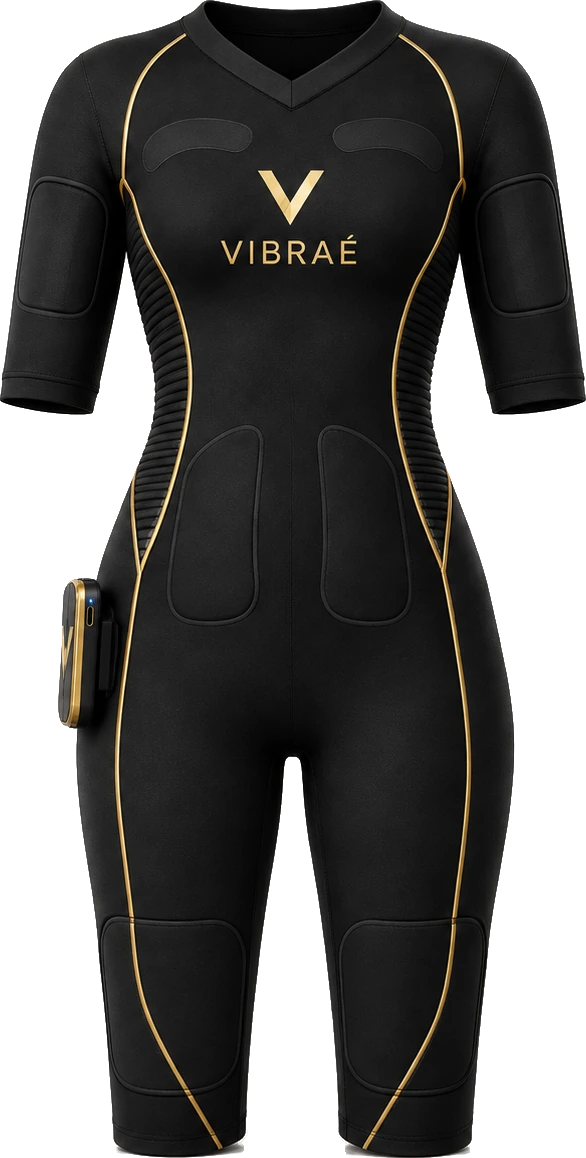
The list of contraindications to electrostimulation is often treated as a declaration to sign before the first visit — a formality ticked off without reading. That is the most expensive possible mistake in this method, because some items on the list concern situations in which the electrical stimulus is not merely ineffective but dangerous.
Updated: 21 September 2026
The aim of this text is to sort these limitations into three groups — absolute, relative and temporary — to explain the rules regarding implants, to describe the symptoms that require contacting a doctor after a session, and to provide a checklist to go through before the first training.
What decides the safety of a session
In a healthy person who starts gently, the commonest side effect remains delayed onset muscle soreness. Safety is decided by four factors:
- health — hence the qualification before the first session and not after it,
- the intensity at the start — the first sessions short and at a low setting,
- recovery — at least a day's break between sessions,
- hydration — before the workout and after it.
The Vibraé suit is not a medical device and does not replace treatment. This text does not replace a consultation either: with a chronic illness or any doubt at all, the decision belongs to a doctor.
Absolute contraindications
The list is based on the international guidelines for WB-EMS (Kemmler et al., 2023) and on the rules applied at Vibraé. In the situations listed, training is not carried out.
| Contraindication | What that means in practice |
|---|---|
| Pacemaker, cardioverter-defibrillator, other electronic implants | the impulse may disturb the device's operation — training is excluded |
| Pregnancy | excluded for the whole of the pregnancy |
| Epilepsy and other neurological conditions | wykluczony |
| Heart rhythm disorders | wykluczony |
| Untreated arterial hypertension | excluded until treatment is introduced and blood pressure is under control |
| Atherosclerosis, arterial circulation disorders | wykluczony |
| A stent or bypass fitted less than 6 months ago | excluded; later only with a cardiologist's consent |
| Thrombosis | wykluczony |
| Cancer currently being treated | wykluczony |
| Severe clotting disorders, e.g. haemophilia | wykluczony |
| Abdominal or inguinal hernia | wykluczony |
| Acute illness, infection, inflammation, fever | postponement until full recovery |
| Recent surgery in the electrode area | postponement until healing and the doctor's consent |
| The influence of alcohol or intoxicants | wykluczony |
Relative contraindications: the decision belongs to a doctor
In these situations training is sometimes possible, but it is decided by a doctor who knows the patient's condition. Once consent has been obtained, the start should be even more cautious than the standard one.
| Situation | Who makes the decision |
|---|---|
| Type 1 or type 2 diabetes | the doctor treating the diabetes |
| Cancer after finishing treatment | onkolog |
| Heart and vascular disease | kardiolog |
| Internal organ diseases, especially kidney disease | the treating doctor |
| Acute back pain without a diagnosis, nerve pain, herniated disc | a doctor or a physiotherapist — first a diagnosis |
| A metal implant (endoprosthesis, plate, screws) fitted more than 6 months ago | the doctor who fitted the implant |
| Significant swelling, fluid retention | the treating doctor |
| Open wounds, eczema, burns, fresh scars where the electrodes go | postponement until healing; with skin conditions, a dermatologist |
| Motion sickness | the treating doctor |
| Ongoing medication for the conditions above | the doctor who prescribed them |
Przeciwwskazania czasowe
Some restrictions pass. We do not give a fixed number of weeks, because healing is individual — the return happens once the condition in the right-hand column is met, not after a date set in advance.
| Situation | When to return to training |
|---|---|
| Infection, cold, fever | after full recovery and the complete resolution of symptoms |
| Surgery or a procedure | after healing and the doctor's consent |
| A fresh tattoo, wound or burn where the electrodes go | after the skin has healed completely |
| Vaginal birth or a caesarean section | after the end of the postpartum period and the doctor's consent |
| Alcohol | you do not train after drinking alcohol or on a day when its effects are felt |
| Acute back pain | after a diagnosis and the consent of a doctor or physiotherapist |
| Strong soreness after the previous session | once the symptoms have passed |
Implants and devices in the body
Electronic implants — a pacemaker, an implantable cardioverter-defibrillator, a neurostimulator and any other electronic device — rule out EMS training. Muscle stimulation may interfere with their operation.
Metal implants, such as a joint endoprosthesis, plates or screws after a fracture, are a relative contraindication. With an implant older than 6 months, the decision rests with the doctor who fitted it. A stent or bypass fitted within the last 6 months rules out training.
With any other implant the same rule applies: you ask the doctor who fitted it. The assumption that an implant which is not electronic is automatically safe has no justification.
Side effects and warning signs
Soreness and fatigue
After the first sessions the muscles usually ache for a few days — including those that do little work in everyday movement. That is a normal reaction to a new kind of stimulus. The next session is done once the discomfort has gone, and with each week of regular work the soreness weakens.
Rabdomioliza
Rhabdomyolysis is damage to the muscles in which substances that burden the kidneys pass into the blood. In the context of WB-EMS it has been described rarely and almost exclusively after first sessions conducted too aggressively — in people who set a high intensity straight away or trained for too long (Kästner et al., 2015). It is precisely these reports that lie behind the rule of limited intensity at the start.
One thing matters, and it is often confused: a mild sensation during the session does not rule out overloading the muscles. That is why the first sessions are run carefully even when, subjectively, more would have been possible.
Symptoms requiring a response after a workout:
- very strong, worsening muscle pain that hasn't eased after 2–3 days,
- swelling and noticeable muscle weakness,
- dark-coloured urine — the colour of cola or strong tea,
- a persistent headache, nausea, generally feeling unwell.
The procedure: stop training, hydrate and contact a doctor urgently; with dark urine, go to A&E. You should say plainly that the symptoms appeared after EMS training. Anyone who has ever had rhabdomyolysis should not start training without a consultation.
How to prepare for the conversation with a doctor
A doctor does not have to know the particular equipment to judge whether training is justified. A complete set of information is enough:
- that it is about electrostimulation of the whole body or of selected muscle groups, through electrodes sewn into a suit,
- that the impulse produces a muscle contraction and the intensity is set separately for each muscle group,
- how long the session is to last and how many sessions a week are planned,
- whether exercises are performed during the session, or whether it is a recovery programme in a lying position.
Bring a list of regularly taken medicines to the appointment, and ask the questions directly: may I train, at what intensity should I start and what should I watch out for. If the doctor has doubts, training is postponed until they are cleared up.
Your first session: what to expect
At the lowest setting you feel a tingling. After raising the intensity a clear contraction appears, subsiding during the rest phase. After a few minutes the same setting may feel stronger — this is a normal reaction and is not a reason to raise the power further.
Muscle soreness usually appears the next day or the day after. The session is stopped immediately in case of dizziness, palpitations, shortness of breath, chest pain and sharp pain other than the sensation of a muscle working.
A safe start with home training
At home nobody watches the session from the side, so the rules have to be simple and unchanging:
- Going through both tables of contraindications and, in case of doubt, a consultation.
- The first sessions short: 10–15 minutes, at low intensity.
- Two or three sessions a week, with at least one day's break.
- The intensity set group by group and raised by one level, only after several weeks.
- Hydration before and after the workout, a light meal 1.5–2 hours beforehand.
- Stopping the session in case of dizziness, palpitations or pain other than the work of a muscle.
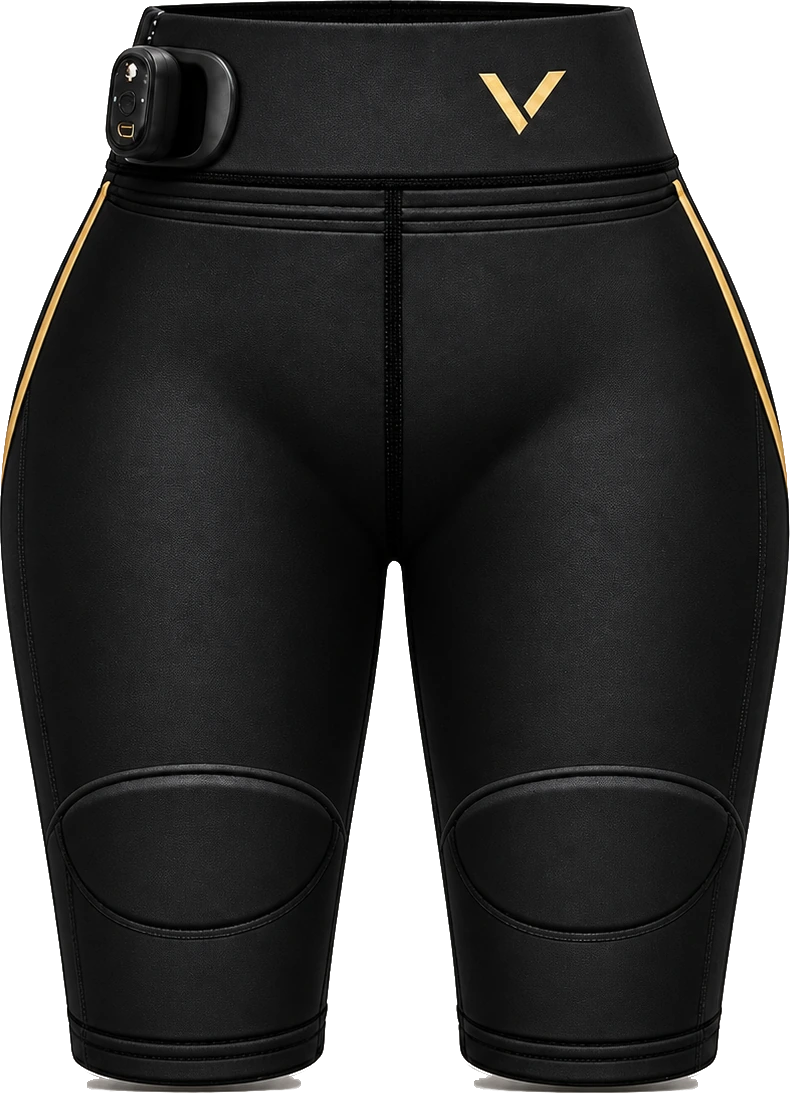
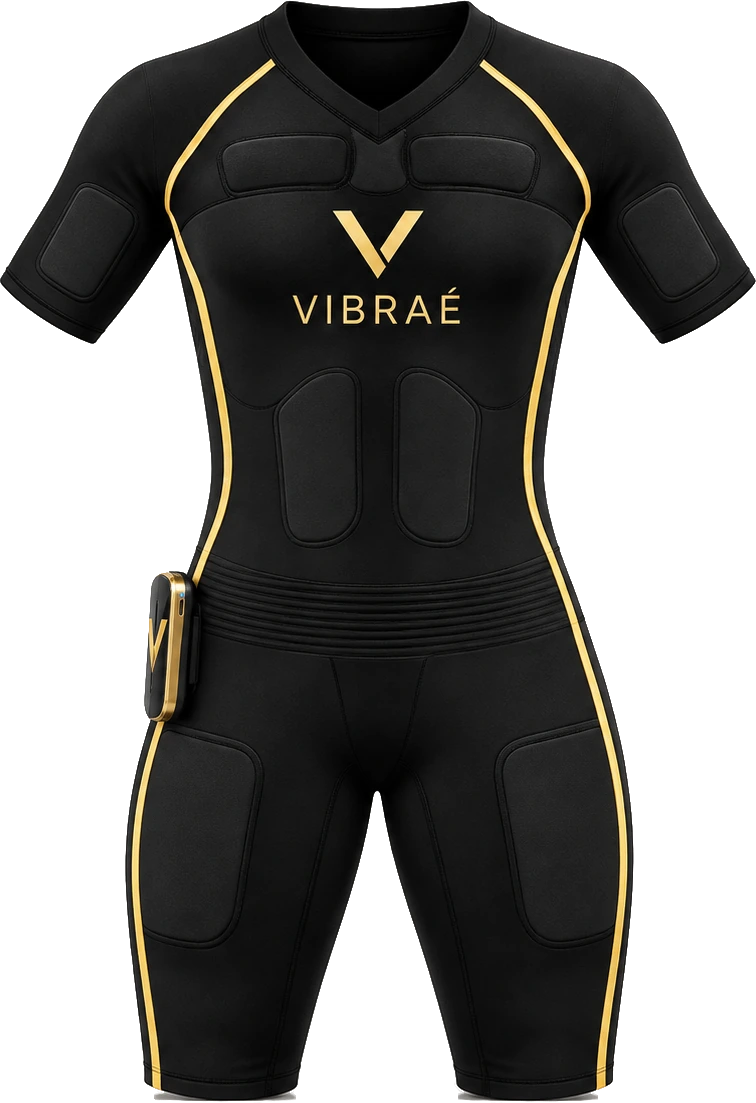
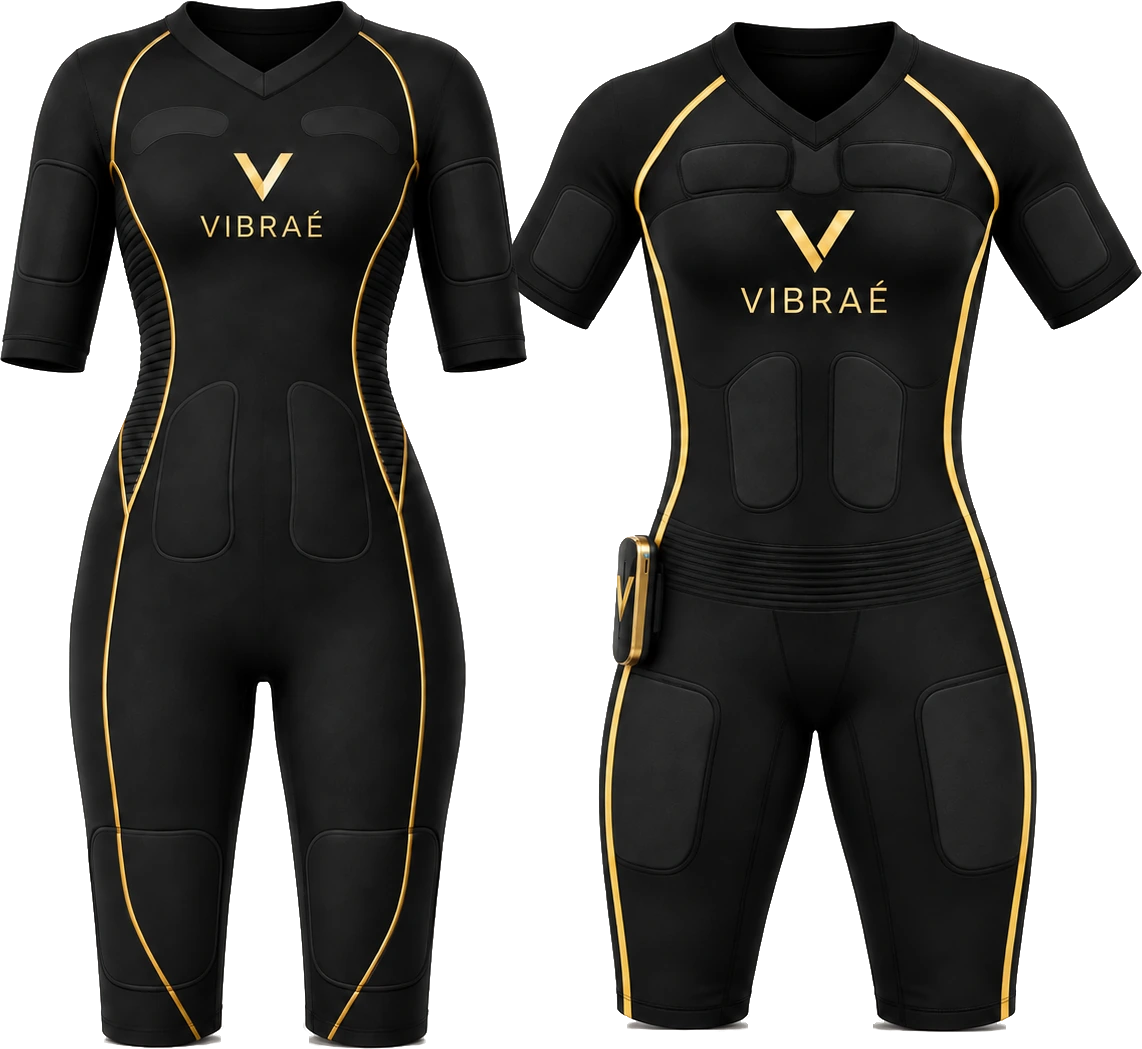
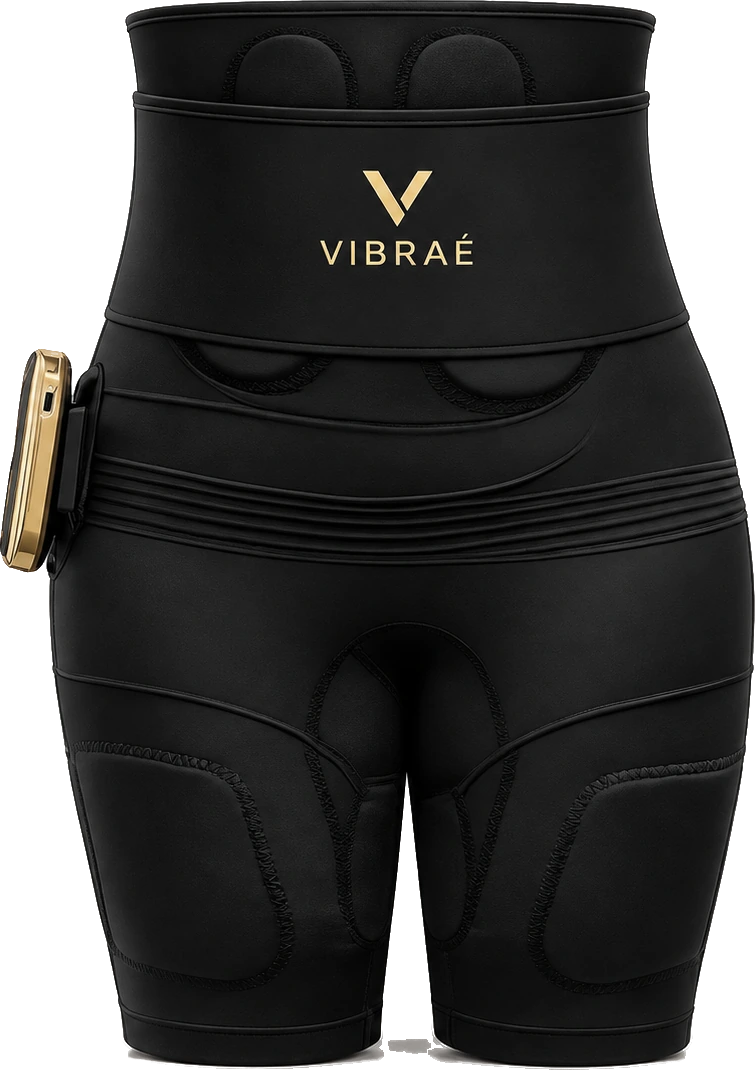
Keeping to these rules is supported by the system: the Vibraé Home app runs the plan, the reminders and the record of sessions, while Vibraé EMS lets you set the intensity separately for each muscle group, with the controller itself timing the work and the breaks. We described the plan for the first twelve weeks together with the intensity rating scale in the article EMS training at home.
Seniors, people who are overweight, athletes
- Older adults. The method requires neither weights nor dynamic movements, which makes it available also at an older age. With chronic conditions and regular medication a consultation is required, followed by a slower start than standard.
- People who are overweight. Exercises in the suit can be done without external load and at a slow pace. The rules for starting stay the same, and with hypertension or diabetes the tables above apply.
- Athletes. High fitness does not mean readiness for this stimulus — the muscles do not know it. The start proceeds as for a beginner, and a strong EMS session is not combined with heavy training of the same muscle groups on consecutive days.
Four beliefs that lead to problems
- „Im mocniej, tym lepiej”. Too high an intensity at the start is the main cause of the complications described in the literature.
- „If it does not hurt, it is not working.” The contraction should be clear and never unpleasant; pain is not a measure of effectiveness.
- „It was easy, so tomorrow I can do it again.” The sensation during the session does not reflect the load on the muscles — a day's break always applies.
- „Without a trainer there is no need to check the contraindications.” It is the other way round: in home training, the qualification rests entirely on the user.
Uczciwie o ograniczeniach tej listy
- The list does not replace an examination. It describes typical situations, not the specific health condition of a specific person.
- With chronic illnesses the decision belongs to the treating doctor — also when a given illness does not appear in the tables.
- The guidelines are updated. The list is based on the state of knowledge from the 2023 guidelines and on Vibraé's practice; it may change with future updates.
Checklist before your first workout
- The table of absolute contraindications gone through — no item applies.
- If an item from the relative table applies — there is a doctor's consent.
- No infection, no fever and no fresh wounds where the electrodes sit.
- Brak alkoholu.
- A light meal 1.5–2 hours beforehand and hydration.
- The suit lies close, the controller charged and connected.
- The first session planned for 10–15 minutes, at low intensity.
- The symptoms that call for urgent contact with a doctor after training are known.
What to expect from regular training we described in the article EMS training results, and a description of the system for home use can be found on the page Vibraé Home Edition.
References
- Kemmler W, et al. Position statement and updated international guideline for safe and effective whole-body electromyostimulation training. Front Physiol. 2023;14:1174103.
- Kemmler W, et al. Whole-body electromyostimulation – rationale and guideline for a safe and effective training. Dtsch Z Sportmed. 2016;67(9):218–221.
- Kästner A, Braun M, Meyer T. Two cases of rhabdomyolysis after training with electromyostimulation by 2 young male professional soccer players. Clin J Sport Med. 2015.
- Kemmler W, et al. Effects of whole-body electromyostimulation with different impulse intensity on blood pressure changes in hyper- and normotensive overweight people. A pilot study (FrEMAP). Front Physiol. 2024;15:1349750.
Who cannot train with EMS?
Absolutely excluded are people with a pacemaker and other electronic implants, pregnant women, people with epilepsy, cardiac arrhythmias, untreated hypertension, atherosclerosis, thrombosis, those undergoing cancer treatment, with severe clotting disorders and with an abdominal or inguinal hernia.
Can you train with EMS with a metal implant?
A metal implant, for example a joint endoprosthesis or a plate after a fracture, is a relative contraindication — the decision rests with the doctor who fitted it, and the implant should be more than 6 months old. Electronic implants rule out training entirely.
Can you train with EMS with high blood pressure?
Untreated hypertension rules out training. With treated and controlled hypertension the decision belongs to the doctor — the FrEMAP pilot study showed that a standard WB-EMS session did not cause a dangerous rise in blood pressure in treated patients, but that does not remove the need for a consultation.
How long after an operation must you not train with EMS?
There is no single number of weeks — the return follows healing and the doctor's approval. Fresh surgery in the area of the electrodes rules out training until it has healed, and after childbirth the postpartum period must end and the doctor must agree.
What is rhabdomyolysis after an EMS workout?
It is muscle damage in which substances that burden the kidneys pass into the blood. In the context of WB-EMS it has been described rarely and mainly after first sessions that were too intense. The warning signs are very strong, increasing muscle pain lasting more than 2–3 days, swelling, weakness and dark urine.
Does a mild sensation during the session mean the training was safe?
No. What you feel during the session does not reflect the actual load on the muscles; the bill arrives over the next two days. That is why the first sessions are run carefully even when subjectively more would have been possible.
Can seniors train with EMS?
The method requires neither weights nor dynamic movements, so it is available also at an older age. With chronic conditions and regular medication a prior consultation is required, and the start should be slower than standard.
What to tell the doctor before the first EMS workout?
That it is about electrostimulation of the muscles through electrodes sewn into a suit, that the impulse produces a contraction and the intensity is set separately for each muscle group, how long the session is to last and how many sessions a week are planned. It is worth bringing to the appointment a list of medicines taken regularly.